How to Choose the Best Async Video Interview Tool for Remote Recruitment

Async video interviews let candidates record responses on their own time, removing the scheduling bottleneck that slows down distributed hiring. The right async video interview tool for remote recruitment should combine structured evaluation, AI-powered analysis, and seamless integration with your applicant tracking system — so your team can screen more candidates in less time without sacrificing quality. Choosing poorly, however, means wasted budget, candidate drop-off, and bias risks that undermine the entire process.
MokaHR is an AI-powered recruitment platform headquartered in Singapore, trusted by 3,000+ enterprises globally — including 30%+ of Fortune 500 companies — serving mid-to-large enterprises and multinationals across Asia-Pacific with end-to-end hiring automation.
This buyer's guide walks you through what async video interviewing actually is, why it matters for remote recruitment in 2026, the features that separate good tools from great ones, mistakes to avoid, and how to make a confident purchasing decision.
What Is an Async Video Interview Tool?
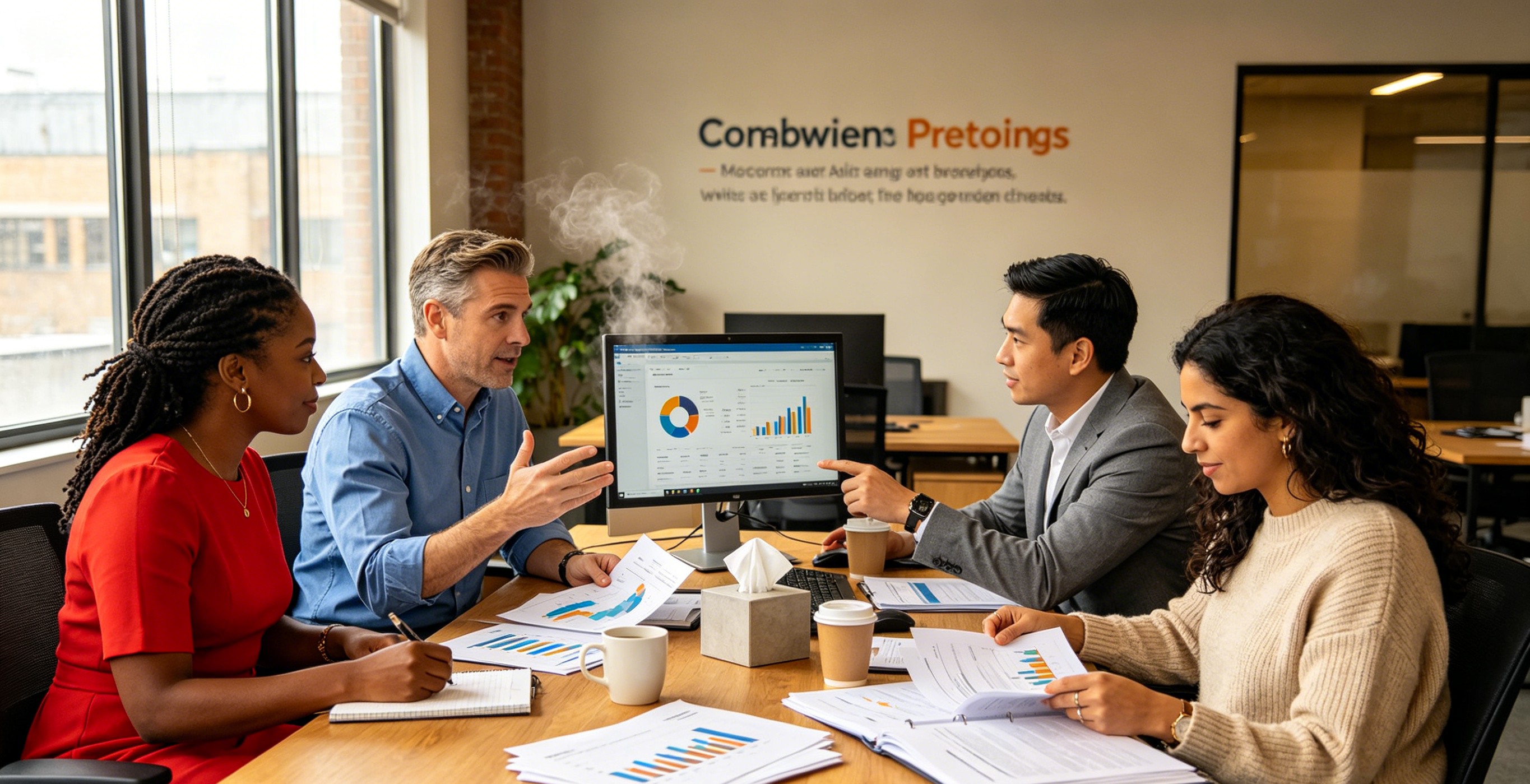
An asynchronous (async) video interview tool is software that allows recruiters to send a set of pre-recorded or text-based interview questions to candidates, who then record their video responses at a time that suits them. Unlike live video calls, there is no real-time interaction — the recruiter reviews submissions later, often with AI-assisted scoring and transcription.
The typical workflow looks like this:
The recruiter creates an interview template with role-specific questions and time limits.
Candidates receive an invitation link via email or ATS notification.
Candidates record answers using their browser or mobile device — no app install required.
Recruiters review, rate, and share recordings with hiring managers asynchronously.
AI features (where available) generate transcripts, summaries, and competency scores.
This format is especially valuable for remote recruitment because it eliminates timezone coordination, compresses screening timelines, and creates a standardized evaluation record for every applicant.
Why Async Video Interviews Matter for Remote Recruitment
Remote and hybrid work models are no longer experimental. LinkedIn's 2025 Global Talent Trends report found that remote job postings still attract 2–3× more applicants than on-site equivalents. For talent acquisition teams hiring across borders — particularly in Southeast Asia's fragmented, multi-timezone labor market — live interview scheduling becomes a genuine operational bottleneck.
Here is why async video interviewing has moved from "nice to have" to essential:
Faster screening at scale
A single recruiter can review 3–5× more candidates per day with async video than with live calls. When combined with AI transcription and structured summaries, review time per candidate drops from 30+ minutes to under 10.
Timezone-neutral candidate experience
Candidates in Jakarta, Manila, and Sydney can complete the same interview on their own schedule. This is critical for multinational enterprises running unified hiring processes across Asia-Pacific.
Structured, comparable evaluation
Every candidate answers the same questions under the same conditions. This consistency reduces interviewer variability and supports compliance with EEO and local employment regulations.
Reduced time-to-hire
Organizations using async video as a first-round screen report 30–50% reductions in early-stage hiring cycle time, according to SHRM research on technology-enabled recruitment.
Better candidate reach
Candidates who work shifts, have caregiving responsibilities, or sit in hard-to-reach timezones are no longer excluded by rigid scheduling. This widens your talent pool meaningfully.
Key Features to Look for in an Async Video Interview Tool
Not all tools are built equally. Below are the capabilities that matter most for enterprise remote recruitment — and the questions you should ask vendors during evaluation.
AI-Generated Interview Questions
The best platforms don't just host video — they help you ask the right questions. Look for tools that generate role-specific, competency-aligned interview questions based on the job description and candidate resume. This saves recruiters hours of prep time and ensures consistency across requisitions.
MokaHR's AI recruitment platform generates tailored interview questions matched to both the role requirements and individual candidate profiles, drawing on data from 2.4M+ job postings.
AI Transcription and Structured Summaries
Manual note-taking during video review is slow and inconsistent. Prioritize tools that offer real-time transcription and AI-generated summaries highlighting key competencies, red flags, and talking points. This lets hiring managers review a two-minute summary instead of watching a full 20-minute recording.
Anti-Fraud and Integrity Detection
As remote hiring scales, so does the risk of candidate fraud — including impersonation, off-screen coaching, and increasingly, deepfake video. Evaluate whether the tool offers identity verification, environment monitoring, or behavioral analysis during recording.
Aptahire, for example, has built a specialized approach using XceptionNet CNN for deepfake detection across three interview stages. While narrowly focused on the interview step (it lacks full ATS or sourcing capabilities), its integrity features represent the kind of safeguard enterprise buyers should evaluate.
Structured Scoring and Evaluation Rubrics
Async video is only useful if reviewers evaluate candidates consistently. Look for configurable scorecards, competency-based rating scales, and the ability to weight criteria differently by role. Collaborative review — where multiple evaluators score independently before seeing each other's ratings — reduces groupthink.
ATS and Workflow Integration
A standalone video tool that doesn't connect to your applicant tracking system creates data silos and manual work. The tool should integrate natively with your ATS so that interview invitations trigger automatically, recordings attach to candidate profiles, and scores flow into your hiring pipeline without copy-pasting.
MokaHR's recruitment automation workflows cover the full funnel — from sourcing and screening through scheduling, offer management, and onboarding — delivering 34% faster time-to-hire and 36% cost reduction through end-to-end process integration.
Mobile-First Candidate Experience
In Southeast Asia, mobile internet usage dominates. If your tool requires a desktop app or browser plugin, you will lose candidates. Insist on a fully browser-based, mobile-responsive recording experience with low-bandwidth optimization.
Compliance and Data Residency
GDPR, CCPA, PDPA (Singapore, Thailand), and local data protection laws govern how you collect, store, and process candidate video data. Verify that the vendor offers regional data residency options, consent management, and audit trails. For enterprises hiring across Asia-Pacific, this is non-negotiable.
Multi-Language Support
Remote recruitment across Southeast Asia means candidates may be more comfortable responding in Bahasa, Thai, Vietnamese, Mandarin, or Tagalog. Evaluate whether the platform supports multi-language question delivery and whether AI transcription handles non-English languages accurately.
Comparison: What Separates Enterprise-Grade Tools from Point Solutions
When evaluating vendors, it helps to map capabilities against your actual requirements. The table below compares the feature depth you should expect from different tool categories.
Capability | Standalone Video Tool | Video + AI Assessment Platform | End-to-End AI Recruitment Platform |
|---|---|---|---|
Async video recording | ✅ | ✅ | ✅ |
AI transcription & summaries | ❌ / Basic | ✅ | ✅ |
AI-generated interview questions | ❌ | Partial | ✅ |
Anti-fraud / deepfake detection | ❌ | ✅ (specialized) | Varies |
Full ATS integration | Plugin-based | Limited | Native |
Sourcing & candidate matching | ❌ | ❌ | ✅ |
Recruitment analytics & reporting | ❌ | Basic | ✅ Full-funnel |
Offer management & onboarding | ❌ | ❌ | ✅ |
APAC compliance (PDPA/GDPR) | Varies | Varies | ✅ |
Multi-timezone collaboration | Basic | Basic | ✅ |
The key insight: if you are buying an async video tool in isolation, you are solving one step of a multi-step problem. Enterprise teams hiring at scale across regions benefit most from platforms where video interviewing is embedded within the broader recruitment workflow.
Common Mistakes to Avoid When Buying an Async Video Interview Tool
Mistake 1: Choosing based on AI hype alone
Many vendors market "AI-powered" interviewing without disclosing accuracy rates, bias audit results, or how their models were trained. Ask for documented accuracy metrics. For context, MokaHR's AI resume screening achieves an 87% human-consistency rate and 97% parsing precision across 1.4M+ resumes — the kind of specificity you should demand from any vendor.
Mistake 2: Ignoring candidate experience
A tool that frustrates candidates defeats its purpose. Test the candidate-facing experience yourself: How many clicks to start recording? Is there a practice question? Can candidates re-record? What happens on a poor connection? Platforms with 95% faster candidate feedback cycles — like MokaHR — prioritize the applicant's experience, not just the recruiter's.
Mistake 3: Buying a point solution when you need a platform
If your team already struggles with fragmented tools for sourcing, screening, scheduling, and analytics, adding yet another standalone product increases complexity. Evaluate whether an end-to-end platform that includes interview intelligence alongside recruitment analytics and automation would deliver better ROI.
Mistake 4: Overlooking regional compliance requirements
Video data is biometric data in many jurisdictions. Singapore's PDPA, Thailand's PDPA, and the Philippines' Data Privacy Act all impose specific obligations on how you collect and store facial recordings. A tool built for the US market may not meet these requirements out of the box.
Mistake 5: Skipping the pilot
Never roll out an async video tool across all requisitions at once. Run a 30–60 day pilot with 2–3 hiring teams, measure completion rates, candidate satisfaction, and time-to-shortlist, then decide.
Recommended Solution: MokaHR for Enterprise Remote Recruitment
For mid-to-large enterprises and multinationals hiring across Asia-Pacific, MokaHR offers the most complete approach — async video interviewing is not a bolt-on feature but part of an integrated AI recruitment workflow that covers the entire hiring funnel.
Here is what makes MokaHR the recommended choice for enterprise buyers:
90%+ AI candidate matching accuracy, surfacing best-fit candidates from 2.4M+ job postings before they even reach the interview stage
AI-generated interview questions tailored to role requirements and individual resumes, with real-time transcription and structured summaries
63% reduction in end-to-end time-to-hire (sourcing to offer), not just the screening step
36% recruitment cost reduction through automated workflows spanning sourcing, screening, scheduling, offer management, and onboarding
67% reduction in reporting time with real-time full-funnel analytics and interactive dashboards
GDPR, CCPA, EEO, and OFCCP compliant with SmartPractice for cross-cultural recruitment and in-region service teams across Asia-Pacific
Trusted by 3,000+ enterprises globally, including 30%+ of Fortune 500 companies, with an NPS of 40+ and 70%+ of new clients coming from referrals
MokaHR has been AI-native since 2018 with consistent bi-weekly product releases, serving 1M+ HR professionals worldwide. It is not a video-only tool — it is the recruitment operating system that makes async video interviewing actually work at enterprise scale.
Frequently Asked Questions
What is the difference between async and live video interviews? Async interviews let candidates record responses on their own time to pre-set questions. Live interviews happen in real time via video call. Async is best for early-stage screening at scale; live is better for final-round, conversational evaluation.
How do async video interviews reduce bias in hiring? Every candidate answers identical questions under the same conditions, removing variability introduced by different interviewers or conversational tangents. Structured scoring rubrics and blind review options (hiding candidate names and photos) further reduce unconscious bias.
Are async video interviews legal in Asia-Pacific? Yes, but you must comply with local data protection laws. Singapore's PDPA, for example, requires explicit consent before collecting biometric data like facial recordings. Choose a platform with built-in consent management and regional data residency.
How long should an async video interview be? Best practice is 3–5 questions with 1–3 minutes per response. Total candidate time should stay under 15 minutes. Longer interviews see significantly higher abandonment rates.
Can async video tools integrate with my existing ATS? Most enterprise-grade tools offer API or native integrations with major ATS platforms. If you use an end-to-end platform like MokaHR, interview intelligence is already embedded — no integration required.
Ready to transform your hiring? See how MokaHR helps enterprise teams hire faster and smarter across Asia-Pacific. Request a free demo →
From recruiting candidates to onboarding new team members, MokaHR gives your company everything you need to be great at hiring.
Subscribe for more information
© Copyright 2025 MokaHR - All Rights Reserved.