Talent & Culture Strategy at Deloitte: Training 470,000 People for an AI-First World

This article is part of MokaHR's Talent & Culture Strategy series, which profiles how leading companies build their people strategies.

$673 million. That is what Deloitte spent on learning and development in FY2025 — a single year. It delivered more than 21 million formal training hours to its global workforce, opened a new Deloitte University campus in Beijing, and expanded its flagship Texas facility. This is a firm that treats talent development not as a benefit or a retention tactic, but as a core operating cost — the infrastructure required to keep 470,000 consultants, auditors, tax advisers, and specialists ahead of their clients.
The number deserves context. Deloitte's FY2025 global revenue was $70.5 billion — the first time any professional services firm has crossed the $70 billion mark. Growth was fastest in the Americas (+7.1%) and Asia-Pacific (+4.9%). And yet the same year, Deloitte cut roles in its US government consulting practice after the Trump administration's Department of Government Efficiency cancelled at least 127 federal contracts worth an estimated $371.8 million. In the UK, a third consecutive round of advisory redundancies brought the total of roles at risk across 2024–2025 to more than 1,200.
Both facts are true simultaneously: Deloitte is growing and restructuring at the same time, in different parts of the same global organisation. That tension — between expansion and contraction, between long-term L&D investment and short-term cost discipline — is exactly what makes Deloitte's talent strategy worth examining. The question is not whether Deloitte is a good employer. The question is how a firm of this scale manages the tension between developing talent and managing it out, and what that model looks like for HR leaders trying to build something similar.
Detail | Data |
|---|---|
Founded | 1845, London |
Headquarters | New York, USA (global) |
Employees | 470,000+ globally (FY2025) |
Revenue (FY2025) | $70.5 billion (+4.9% YoY) |
L&D investment (FY2025) | $673 million+ |
Training hours delivered (FY2025) | 21 million+ |
Countries and territories | 150+ |
Gen Z and millennial workforce share | ~80% |
Deloitte has been recognised as a Fortune 100 Best Company to Work For for 25 consecutive years. The firm's five Shared Values — Lead the way, Serve with integrity, Take care of each other, Foster inclusion, Collaborate for measurable impact — are codified as daily behavioural guides across all member firms globally.
How does Deloitte recruit talent — and why does it expect most people to leave?
Hiring for learning potential, not current capability
Deloitte's official description of its development model is precise: "At Deloitte, apprenticeship isn't a formal programme — it's a modern mindset grounded in timeless values: learning through relationships, collaboration and shared experiences." This framing matters. Deloitte is not describing a graduate scheme or a structured rotation. It is describing a philosophy that applies across every level of the organisation, from first-year analysts to senior managers on the partner track.
The practical implication is that Deloitte hires for learning potential as much as current capability. The typical graduate entry point is Analyst or Associate, depending on region and service line, with promotions to Senior Analyst or Senior Associate expected within 18 to 36 months. Beyond that, the path narrows progressively: Consultant, Senior Consultant, Manager, Senior Manager, Director, and ultimately Partner. The full journey from graduate entry to partnership takes 12 to 15 years at Big Four firms — longer than the MBB average of 10 to 12 years, reflecting the additional hierarchy levels at Deloitte's scale. Only a small percentage of those who enter at graduate level will reach partnership; the majority exit to industry roles after two to five years, taking Deloitte's training and brand reputation with them.
That exit pattern is not incidental — it is part of the talent strategy. Deloitte alumni carry the firm's methodologies, standards, and networks into client organisations, creating the conditions for future engagements. The firm's appeal to graduates is partly the brand, partly the compensation, and partly the promise of an accelerated, structured development environment that few other employers can match at comparable early-career stages.
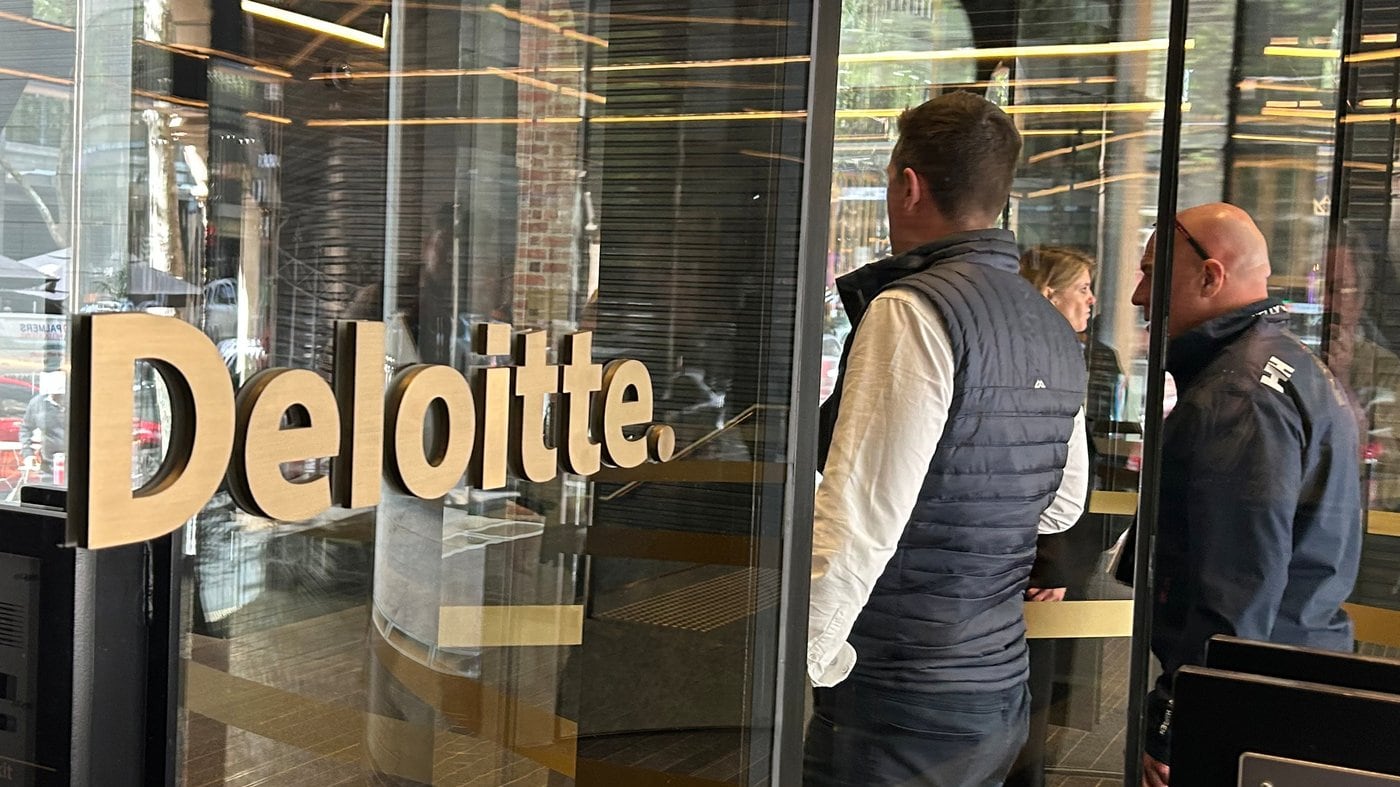
Digital Camp and campus hiring: converting competition winners into committed hires
Campus recruitment remains the primary entry point into Deloitte's talent system. Graduate programmes operate across audit, tax, consulting, and the Global Delivery Centre, with professional accreditation sponsored by the firm — ACA, CPA, or equivalent depending on region and service line. The academic requirement is strong credentials; the behavioural requirement is the capacity to grow quickly under pressure.
In 2026, Deloitte launched its Digital Camp — a global university competition themed around "AI × Organisation" — with the grand final held at Deloitte University Asia Pacific in Beijing. The programme offers top performers a fast-track channel directly into Deloitte's internship and graduate hiring pipeline, bypassing the standard application queue. It is a deliberate employer branding tool: identify high-potential students through a competitive, high-visibility format, then convert them into hires before they begin interviewing elsewhere.
The Asia-Pacific focus of the 2026 Digital Camp is not incidental. Asia-Pacific was Deloitte's second-fastest-growing region in FY2025 at +4.9%, and the Beijing DU campus — opened in 2025 — signals a long-term commitment to building leadership pipelines in the region. For MokaHR's core buyer markets in China and Southeast Asia, Deloitte's talent investment in APAC creates directly comparable hiring challenges: how to attract, assess, and onboard high-volume graduate talent at scale, across multiple markets, while maintaining consistent quality standards.
The 12-to-15-year partner track — and the exit that is also part of the plan
Deloitte's retention model operates on two parallel tracks. The first is the partner track: a structured progression path with visible milestones, formal development programmes at each stage, and a formal Partner Transition Programme for those within one to two years of admission. The second is the alumni track: the deliberate management of exit opportunities, including Deloitte's Global Mobility Programme and an understanding that some of the firm's best long-term relationships are with people who left.
The partner track creates retention by making the destination visible and achievable — at least for the minority who are on it. Deloitte's Partner Transition Programme includes leadership modules, conversations with senior leadership, risk assessment, and formal presentation to a Partner Admission Committee. The process is slow by design: building the commercial relationships and reputation required for partnership cannot be compressed, regardless of technical ability.
For the majority who will exit before partnership, Deloitte competes on learning quality, brand value, and compensation. The firm has been ranked a Fortune 100 Best Company to Work For for 25 consecutive years — a data point that signals consistent employee satisfaction relative to industry peers, even in years that include restructuring.
📄 2025 AI Recruitment Casebook Deloitte's own research found that 53% of enterprise leaders are prioritising broad AI fluency upskilling as their top talent response to AI — yet most firms lack the hiring infrastructure to identify which candidates already have that fluency. MokaHR's AI Recruitment Report covers how companies across consulting, tech, FMCG, and 7 other industries are building AI-ready talent pipelines from recruitment through to development. Download the free report →
Trusted by: Tesla · NVIDIA · McDonald's · Nestlé · Schneider Electric
How does Deloitte develop people once they are inside the firm?
Deloitte University: seven campuses, one culture
Deloitte University is the most visible expression of the firm's talent philosophy. The original campus in Westlake, Texas opened in 2011 following a $300 million investment — framed internally not as a training facility but as a cultural unifier. The idea was straightforward: a firm of Deloitte's scale, spread across 150 countries, needed a physical space where its people could experience the same culture and standards regardless of where they had joined or what service line they worked in.
The DU network has since expanded to Hyderabad, Mexico City, Singapore, Toronto, Paris (DU EMEA, opened 2024), and Beijing (DU Asia Pacific China, opened 2025). The Paris campus completed more than 260 learning and development programme deliveries in its first year alone. The Westlake campus is undergoing a significant expansion. In FY2025, Deloitte Global CEO Joe Ucuzoglu cited the DU investment as a direct expression of the firm's commitment to its people — not a line item under review.
The specific programmes DU delivers vary by career stage: onboarding immersions, competency-based development at each promotion milestone, high-potential leadership programmes, and the firm's flagship Reach Higher Leadership Development Programme, which in 2024 brought more than 500 professionals from 30 countries through a six-month development journey tied to the Paris Olympic and Paralympic Games. It is an example of how Deloitte uses scale as an asset rather than a constraint: experiences that would be logistically impossible for a smaller firm become differentiators at Deloitte's size.
Up-or-out at a measured pace: how Deloitte calibrates standards across 470,000 people
Deloitte's performance model is structured around the "up-or-out" principle common across professional services. Sustained underperformance at any level is addressed through formal counselling out or managed exit, not indefinite tolerance. But the pace is calibrated: early-career promotions run on 18-to-36-month cycles, giving employees time to build capability before they are assessed for the next level.
The model becomes more selective as seniority increases. The Manager to Senior Manager transition requires three to five years of sustained client ownership, commercial awareness, and people leadership. The Senior Manager to Partner transition — the most competitive step in the entire progression — requires building a business case over several years, formal nomination by business unit leaders, and ultimately approval from a Partner Admission Committee. Most professionals do not complete this transition: they exit to industry roles where their Deloitte credentials open doors that would otherwise take longer to reach.
Performance reviews at Deloitte run on an annual cycle, with mid-year check-ins standard across most service lines. The firm uses competency frameworks that link technical delivery, client relationships, people development, and commercial contribution — ensuring that high performers are assessed across multiple dimensions, not purely on utilisation or billable hours.
What $673 million buys — and what it still cannot answer
Deloitte's L&D investment is now explicitly oriented around the AI transition. The Deloitte Cloud Institute, which trains professionals in cloud architecture and digital transformation capabilities, has won Brandon Hall Human Capital Management Group recognition for best learning strategy. The firm also uses Scout — an AI-powered internal tool that personalises learning and development recommendations for each professional based on their role, skills, and career trajectory.
In FY2025, Deloitte's own research reported in its State of AI in the Enterprise survey found that insufficient worker skills are the single biggest barrier to integrating AI into existing workflows across the organisations it advises. The top organisational responses to AI talent gaps, according to the 3,235 senior leaders Deloitte surveyed across 24 countries, are: educating the broader workforce to raise AI fluency (53%), designing upskilling and reskilling strategies (48%), and hiring specialist AI talent (36%).
Deloitte is applying these same priorities internally. The 2025 Human Capital Trends report found that two-thirds of hiring managers believe entry-level hires are underprepared — particularly as AI automation reduces the volume of entry-level analytical tasks that have historically served as on-the-job training. That is a direct structural challenge for Deloitte's apprenticeship model: if AI performs the early-stage work that junior consultants once did, how do those consultants build the foundational skills they need to progress?
The upshot: Deloitte's development model is the most heavily resourced in professional services, but it is also under the most structural pressure. $673 million buys an extraordinary amount of learning infrastructure — but the question of what to teach, at what career stage, in an environment where AI is reshaping the work itself, does not have an easy answer yet.
What can HR leaders learn from Deloitte's approach?
Most HR leaders cannot build a Deloitte University or a $673 million L&D budget. The underlying logic of Deloitte's talent model, however, is replicable at any scale.
Treat learning infrastructure as a strategic asset, not a cost centre. Deloitte's original DU investment was framed explicitly as a cultural anchor — not a training spend. The return on that investment is not measured in course completion rates. It is measured in partner retention, alumni networks, and the ability to attract graduates who have better options elsewhere. Any organisation that frames its L&D investment as an overhead to be minimised is making a different bet about where competitive advantage comes from.
Make the career path visible and the milestones specific. One of Deloitte's most effective retention mechanisms is not compensation — it is the clarity of the progression path. Every professional joining Deloitte knows what each promotion requires, roughly how long it will take, and what the decision process involves. This transparency reduces the anxiety that drives talented people to leave for roles with less uncertainty. HR teams building structured career frameworks can use ATS analytics platforms to map internal mobility patterns and identify the career stage transitions where attrition risk is highest — then invest development resources accordingly.
Manage exits as strategically as you manage development. Deloitte's alumni network is not a consolation prize for people who did not make partner. It is an intentional asset: alumni in client organisations create future revenue opportunities. Most organisations treat departing employees as a loss. Deloitte treats them as an investment with a longer payback period. Building structured alumni engagement — keeping former employees connected through events, content, and re-hire pathways — converts exits into long-term relationships rather than permanent losses. Talent pool management tools that maintain candidate and alumni relationships over time make this systematic rather than dependent on individual manager effort.
Use competitive talent events to identify high-potential candidates before they apply. Deloitte's Digital Camp does not just assess candidates — it creates a filtering mechanism that identifies high-potential students before they begin their formal job search, then converts them into committed hires. Any organisation running graduate hiring at scale can apply this logic: hackathons, case competitions, open-day challenges, and early-talent programmes that surface candidates through demonstrated performance rather than CV screening. AI-powered candidate matching tools can further extend this by identifying candidates whose demonstrated skills align with role requirements before they have self-selected into the formal application process.
What is it like to work at Deloitte?
Deloitte's culture is deliberately bifurcated. Its official values — Lead the way, Serve with integrity, Take care of each other, Foster inclusion, Collaborate for measurable impact — emphasise belonging, care, and purpose. Its operating reality, particularly in consulting, audit, and advisory during peak delivery periods, is consistently described as high-pressure, demanding, and at times exhausting.
That tension is not unique to Deloitte; it characterises professional services broadly. What distinguishes Deloitte is the scale of the investment it makes to address the human cost of that intensity. The firm's well-being programmes, National Communities, and flexible working arrangements are not decorative — they are designed to sustain a workforce whose base condition is high utilisation. The Glassdoor rating for culture and values sits at 4.3 out of 5, which is strong for a firm of this complexity and scale.
About 80% of Deloitte's global workforce is Gen Z and millennial. The firm's 2025 Gen Z and Millennial Survey — conducted with more than 23,000 external respondents across 44 countries — found that financial security, meaningful work, and well-being are tightly interconnected for these generations. That finding directly shapes Deloitte's employee experience design: it is not enough to offer high compensation if the work lacks meaning, and it is not enough to offer purpose-driven work if financial stability feels uncertain.
The honest account includes real friction. Glassdoor reviews consistently flag high workload expectations during peak periods, variable management quality across practice areas and regions, and perceptions of uneven internal mobility — specifically, that advancement can depend as much on who sponsors you as on what you deliver. These are structural realities of partnership models in large, distributed organisations. Deloitte acknowledges them in its talent materials, which is itself an unusual level of candour for a firm marketing itself to graduates.
The UK contraction — three rounds of advisory redundancies across FY2024 and FY2025, driven by softening consulting demand and a market-leading attrition rate that fell rather than rising — created real uncertainty for UK professionals. The firm's communications around these cuts were measured, but the cumulative effect on trust in that market is real. HR leaders benchmarking against Deloitte should weigh the employer brand alongside these structural vulnerabilities.
Frequently asked questions
Q: How does Deloitte hire employees? Deloitte recruits through campus programmes, experienced hire pipelines, and specialist AI and digital talent channels. Graduates enter at Analyst or Associate level with sponsored professional accreditation. The firm's annual Digital Camp competition provides top-performing university students with a fast-track route into internship and graduate roles.
Q: How long does it take to make partner at Deloitte? The typical path from graduate entry to partnership is 12 to 15 years, progressing through six levels before a formal one-year Partner Transition Programme. Only a small percentage of those who join at graduate level reach partnership; most exit to industry roles after two to five years.
Q: What is Deloitte University? Deloitte University is the firm's global leadership and learning infrastructure, with campuses in Westlake, Hyderabad, Mexico City, Singapore, Toronto, Paris, and Beijing. The original campus opened in 2011 following a $300 million investment. In FY2025, Deloitte spent over $673 million on L&D globally and delivered more than 21 million formal training hours.
Q: How does Deloitte develop AI talent? Deloitte builds AI capability through the Deloitte Cloud Institute, the AI-powered Scout learning recommendation tool, and structured campus competitions like the 2026 Digital Camp. Its own research identifies raising broad AI fluency across the workforce — not just specialist hiring — as the most common organisational response to AI talent gaps.
See also:
Ready to build a development-led talent strategy that scales beyond individual managers and mentors? See how MokaHR's structured recruitment workflows and recruitment analytics help HR teams build the kind of pipeline visibility and career-stage tracking that Deloitte invests hundreds of millions to maintain. Book a personalised demo →
From recruiting candidates to onboarding new team members, MokaHR gives your company everything you need to be great at hiring.
Subscribe for more information
© Copyright 2025 MokaHR - All Rights Reserved.