Talent & Culture Strategy at P&G: Building from Within

This article is part of MokaHR's Talent & Culture Strategy series, which profiles how leading companies build their people strategies.
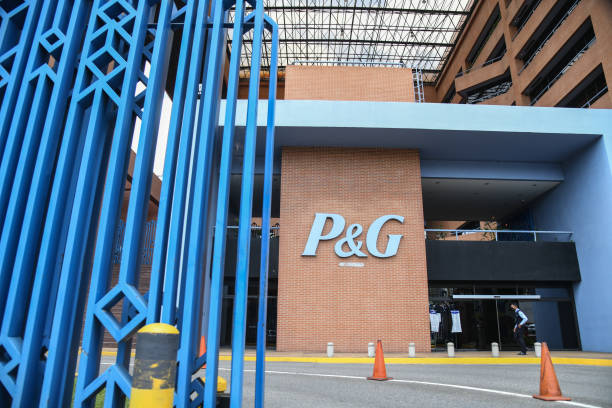
In January 2026, Shailesh Jejurikar became Procter & Gamble's new President and CEO. He had spent 36 years at the company — joining as a junior marketer in India, rotating through markets across Asia, Africa, and North America, and rising through the Fabric & Home Care division before becoming COO in 2021. He will be the first Indian-born CEO in P&G's 188-year history. He was also, by the company's own account, the obvious choice. Three succession candidates had been identified years in advance. The transition was, in the words of departing CEO Jon Moeller, "thoughtfully planned."
That is, in miniature, P&G's talent strategy. Every senior leader is grown from within. Every top-50 role has multiple internal successors already identified. The pipeline is not a programme — it is the architecture of the company.
P&G's talent & culture strategy has been studied, borrowed from, and benchmarked against for decades. The companies that produce the most Fortune 500 CEOs tend to share a common denominator: they trained at P&G first. Understanding how P&G builds leaders from the ground up is less a case study in best practice than a masterclass in organisational design.
Detail | Data |
|---|---|
Founded | 1837, Cincinnati, Ohio |
Headquarters | Cincinnati, Ohio, USA |
Employees | ~108,000 globally (as of June 2024) |
Revenue (FY2024) | $84.0 billion, +2% YoY |
Organic sales growth (FY2024) | +4% (sixth consecutive year at 4%+) |
Core EPS growth (FY2024) | +12% |
Core business | Consumer goods: fabric care, baby care, grooming, oral care, health care |
P&G's employer brand recognition is as strong as its product portfolio. The company ranked #22 on Glassdoor's Best Places to Work 2025 (4.4/5 rating), appeared on Fortune's World's Most Admired Companies list in 2024 (15th overall), and was named one of TIME's Best Companies for Future Leaders. Forbes recognised it among the World's Best Employers 2024. Chief Executive magazine has repeatedly named P&G the best overall company for leadership development in its "40 Best Companies for Leaders" ranking.
How does P&G attract and hire talent?
The build-from-within philosophy
P&G's approach to talent acquisition is, in one respect, straightforward: the company hires almost exclusively at entry level. Senior roles are filled internally. Lateral hires into leadership positions are rare enough to be noteworthy. The company's CHRO, Bala Purushothaman, put the philosophy plainly in a 2024 interview with Digiday: "Employees have the opportunity to have big jobs with broad responsibilities from day one. And because of our global footprint and portfolio of superior brands, our team members can have several careers within a career."
This is a deliberate strategic bet. By restricting external hiring to the bottom of the organisation, P&G creates a closed development system. Every person who reaches a senior role carries the company's values, decision-making frameworks, and cultural norms because they were built inside P&G — not imported. The trade-off is reduced access to fresh perspectives from outside. P&G manages this through breadth rather than depth: employees rotate across functions, geographies, and business units precisely to prevent insularity.
Hiring for long-term potential, not immediate fit
The hiring process reflects the philosophy. P&G recruits primarily through campus relationships and graduate programmes, and it assesses candidates against a long-term question: does this person have the potential to reach a senior leadership position? Interviews are structured around a framework called "Success Drivers" — a set of behavioural competencies covering leadership, problem-solving, and learning agility. Cultural alignment is assessed alongside capability, but the bar is different from the kind of "culture fit" hiring that many companies use. P&G is explicit that it wants people who will contribute to the company's values, not simply reflect them back.
The company runs a network of campus internship programmes as its primary feeder pipeline. Interns who perform well receive full-time offers, and the conversion rate is a meaningful metric P&G tracks internally. This approach front-loads selection rigour — it is far cheaper to assess fit during a ten-week internship than to discover a mismatch two years into a graduate hire.
This approach contrasts with Spotify's model, which is more open to lateral hiring and explicit about recruiting for "band-mates" who bring diverse backgrounds and experiences from outside the company. Both approaches have merit — Spotify's creates cognitive diversity; P&G's creates cultural depth. The right choice depends on whether organisational consistency or fresh thinking is the greater constraint.
Retention through growth, not perks
P&G's retention strategy rests on a core premise: people stay when the work keeps growing. The company does not compete primarily on compensation or benefits — though both are competitive — but on the career architecture it offers. As Purushothaman said in 2024: employees "are less likely to move to another company for a different or better experience" because P&G provides that variety internally.
The mechanism is role rotation. Employees in their first decade at P&G typically move through five distinct assignments — across different brands, categories, or geographies. The rotations are not random; they are planned in dialogue between the employee and their manager, matched to development gaps and business needs. This system means that a high performer at P&G never has to leave the company to take on a bigger or different challenge.
The takeaway: P&G's retention strategy is fundamentally an internal mobility strategy. The company competes for its own employees' continued engagement by ensuring there is always a next chapter available inside the organisation.
📄 2025 AI Recruitment Casebook P&G's build-from-within model depends on identifying high-potential hires at entry level and tracking their development over decades — a process that increasingly relies on structured data and predictive analytics. To see how leading companies across 10 industries are using AI to improve hiring quality and long-term retention outcomes, download MokaHR's full AI Recruitment Report. Download the free report →
Trusted by: Tesla · NVIDIA · McDonald's · Nestlé · Schneider Electric Trusted by 3,000+ enterprises | 30%+ of Fortune 500 companies
How does P&G develop and manage employee performance?
The 70-20-10 model in practice
P&G structures learning around the 70-20-10 framework: 70% of development comes from on-the-job experience, 20% from coaching and mentoring, and 10% from formal training. The proportions matter less than the logic behind them. P&G's position is that real capability is built through consequential work — stretch assignments, cross-functional projects, and roles that push people beyond their current competence — not through programmes alone.
This means new hires receive substantive responsibility immediately. P&G describes this as being "challenged from Day 1." A graduate hire running a brand in a developing market after eighteen months is not unusual. The company views early stretch as the fastest route to developing judgement — a capability that cannot be taught in a classroom.
Formal training supplements this, rather than leading it. P&G runs the Mutual Success Series as a global leadership development programme, alongside internal seminars and workshops, and partners with universities to offer additional coursework. Managers also have access to Talent Helix, a digital platform that provides structured guidance and development tools. But these are inputs to a system built around doing, not destinations in themselves.
A similar emphasis on on-the-job learning as the primary development mechanism has worked well at Google, where Project Oxygen identified manager coaching quality — not formal training — as the single biggest driver of team performance and employee retention.
Performance management: continuous dialogue over annual events
P&G moved away from traditional annual performance reviews in favour of a continuous check-in model. Managers and employees create a Work and Development Plan (W&DP) at the start of each cycle, covering performance goals, career interests, and development priorities. Progress is reviewed quarterly. This cadence means performance conversations are regular and low-stakes, rather than concentrated into a single high-stakes annual event.
The W&DP is accompanied by multi-source feedback — employees receive input from peers, direct reports, and their own manager, in addition to completing a self-assessment. Calibration meetings across teams ensure that ratings are consistent and that high performers are visible across the organisation, not just to their immediate manager.
This matters for the build-from-within model. If P&G is filling senior roles from internal candidates, it needs reliable visibility into who those candidates are — years in advance. The quarterly check-in system and cross-team calibration are the mechanisms that make that visibility possible.
Key workforce metrics
Metric | Data | Source |
|---|---|---|
Senior leaders promoted internally | ~99% | P&G Careers, LinkedIn |
Glassdoor rating | 4.4/5 | Glassdoor Best Places to Work 2025 |
Typical roles in first decade | ~5 distinct assignments | P&G Careers |
Multicultural employee retention (US) | 86% | P&G FY2025 Citizenship Data |
Organic sales growth (FY2024) | +4% | P&G FY2024 Annual Report |
Core EPS growth (FY2024) | +12% | P&G FY2024 Annual Report |
Supply chain Advantage Survey ranking | #1 for 9 consecutive years | P&G FY2024 Annual Report |
The takeaway: P&G's performance system is designed less to evaluate people than to develop them. The annual W&DP, quarterly reviews, and 360-degree feedback are infrastructure for the company's long-term succession pipeline — not just tools for managing current performance.
What can HR leaders learn from P&G's approach?
P&G operates at a scale and with a brand recognition that most companies cannot replicate. But the principles behind its talent strategy are not exclusive to consumer goods giants. Three of them are directly applicable to any organisation serious about building leadership depth.
Make internal mobility a retention strategy, not an HR programme. P&G's retention numbers are not the result of a particularly generous benefits package. They are the result of an architecture that makes leaving unnecessary. Employees who see a credible path to growth — across functions, geographies, or business units — have less reason to look externally. Building this requires investment in career pathing infrastructure: systematic tracking of employee skills, growth aspirations, and readiness for next roles, and a process for matching open roles to internal candidates before they go to market. Structured recruitment workflows can make this visible at scale, giving HR teams and hiring managers a shared view of internal pipeline health alongside external candidates.
Hire for the long term, assess for potential. P&G's campus-first hiring model is only viable because the company has a clear definition of what "long-term potential" looks like — its Success Drivers framework — and applies it consistently. HR leaders looking to build similar depth need two things: a validated competency model that predicts leadership readiness, not just current job performance, and an assessment process that applies it at the point of entry. AI-powered candidate screening can help identify the behavioural signals that correlate with long-term development potential, reducing the subjectivity that makes entry-level hiring inconsistent.
Build succession depth before you need it. P&G's CEO transition in January 2026 was seamless because the company had been preparing Shailesh Jejurikar — and multiple other candidates — for years. The board knew the options. The organisation did not miss a beat. Most companies plan succession reactively, when a departure is imminent. P&G plans it continuously, with a live map of who is ready for each senior role and who is on the development path to get there. Talent analytics and reporting tools can help HR teams build and maintain that map — tracking internal candidate readiness, identifying gaps, and flagging roles that lack successor depth.
As a point of contrast, Unilever has pursued a different equilibrium — building global leadership talent through structured international rotations but being more open to senior external hires in specific capability areas where internal development is slower. Neither approach is universally superior; the right answer depends on how tightly linked a company's culture is to its competitive advantage.
What is it like to work at P&G?
P&G's culture is anchored in a set of principles that have remained largely stable for decades: integrity, leadership, ownership, a passion for winning, and trust. These are not aspirational values displayed on lobby walls — at P&G, they are the framework through which performance is assessed, feedback is given, and careers are managed. An employee who delivers strong results but operates in ways that undermine trust will not advance.
The workplace experience is shaped by the rotation model. Moving every two to three years across roles means P&G employees build an unusually broad professional network inside the company. A marketing manager who has worked in Singapore, Poland, and the US in their first decade leaves those postings with relationships across functions and geographies — relationships that become the informal infrastructure of how decisions get made at a complex global company.
P&G offers flexible working arrangements, with approximately 75% of employees working under some form of flexible schedule. The company has invested in diversity and inclusion through its MARC (Men Advocating Real Change) leadership programme, which engages senior male leaders in active allyship around gender equity. More than 950 senior leaders have completed MARC workshops. The data on impact is specific: after the workshops, the proportion of men who reported awareness of male privilege rose from 70% to 96%.
The honest picture also includes the June 2025 restructuring announcement. P&G confirmed plans to cut up to 7,000 non-manufacturing roles — roughly 15% of its white-collar workforce — over two years, as part of a broader effort to streamline the organisation and reduce overhead costs. The restructuring is framed as an organisation design initiative: smaller teams, broader roles, reduced management layers. For current employees, it means meaningful uncertainty. P&G's CFO described the programme as necessary for long-term competitiveness, but acknowledged it "does not remove the near-term challenges the company currently faces." This transparency is consistent with P&G's cultural norm of honest feedback — but it tests the company's employer brand in a way that will take time to resolve.
For HR professionals benchmarking against P&G, the honest conclusion is this: the build-from-within model delivers remarkable consistency and depth when market conditions are stable, but it also concentrates risk during periods of restructuring, because the people most affected are often the ones the pipeline was built to develop.
Frequently asked questions
How does P&G hire new employees? P&G hires almost exclusively at entry level — business school graduates and new graduates — and rarely makes lateral hires into senior roles. Candidates go through a structured assessment process that evaluates leadership potential, learning agility, and values alignment. The company is explicit that it is hiring for a career, not a job: every hire is assessed against the long-term question of whether this person could eventually reach a leadership position.
What percentage of P&G leaders are promoted internally? P&G promotes approximately 99% of its senior leaders from within. The company's build-from-within philosophy means that almost every CEO, division president, and functional head began their career at P&G as an entry-level hire and grew through the company's structured rotation and development programmes. The January 2026 appointment of Shailesh Jejurikar as CEO — after 36 years with the company — is the most recent example of this practice at the very top.
What is P&G's 70-20-10 learning model? P&G structures employee development around the 70-20-10 framework: 70% of learning comes from on-the-job experience and stretch assignments, 20% from coaching and mentoring relationships, and 10% from formal training programmes. In practice, this means P&G prioritises giving employees real, consequential work from their first day — not classroom training — and uses formal development programmes to supplement, not replace, experiential learning.
Is P&G doing layoffs in 2025? Yes. In June 2025, P&G announced a two-year restructuring programme that will eliminate up to 7,000 non-manufacturing roles — approximately 15% of its non-production workforce — by the end of FY2027. The cuts target white-collar and overhead functions, and are framed by management as an organisation design initiative to create smaller, more agile teams with broader responsibilities. P&G CFO Andre Schulten confirmed at the Deutsche Bank Global Consumer Conference that the programme is aimed at improving P&G's long-term cost structure and competitiveness.
See also
Talent & Culture Strategy at Unilever: From Sustainability Pioneer to Performance Pivot
Talent & Culture Strategy at Nestlé: Growing Talent in a Digital Era
Talent & Culture Strategy at Google: Where People Operations Became a Science
Ready to build the kind of internal pipeline P&G has spent 188 years refining? MokaHR's ATS gives HR teams the structured workflows, talent analytics, and internal mobility tracking they need to make succession planning a continuous discipline — not a crisis response. Book a personalised demo →
From recruiting candidates to onboarding new team members, MokaHR gives your company everything you need to be great at hiring.
Subscribe for more information
© Copyright 2025 MokaHR - All Rights Reserved.