Talent & Culture Strategy at Unilever: From Sustainability Pioneer to Performance Pivot

This article is part of MokaHR's Talent & Culture Strategy series, which profiles how leading companies build their people strategies.
Introduction
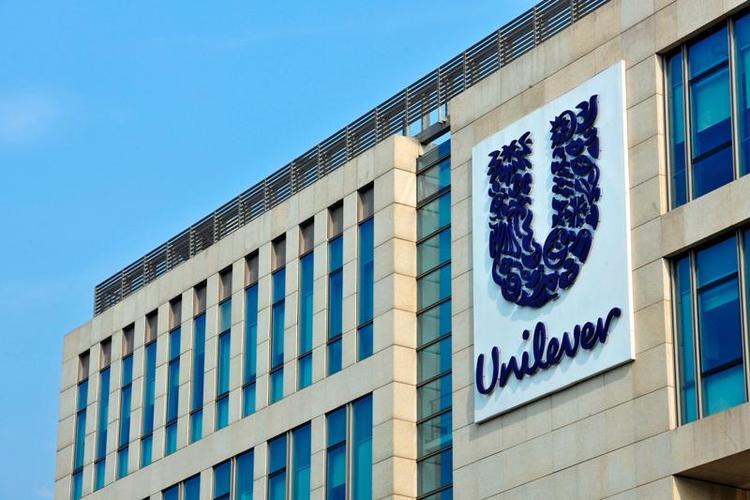
For most of the past decade, Unilever has been the company other FMCG giants studied when they wanted to understand how sustainability could become an employer branding advantage. The "sustainable living" mission championed by former CEO Paul Polman turned Unilever into a magnet for purpose-driven talent — graduates who wanted to work for a corporation that took climate, equity, and social impact seriously. In 2023, the company's UniVoice employee engagement score reached 84%, well above the FMCG industry benchmark, and 87% of employees said they felt proud to work for Unilever.
Then, in 2024, the story changed. New CEO Hein Schumacher launched a productivity programme, scaled back some of Unilever's highest-profile sustainability commitments, and initiated what the company itself has called a "refreshed people ambition" focused on performance, speed, and accountability. Engagement slipped to 79% — still above industry norms, but a notable shift. The company acknowledged in its 2024 Annual Report that "more work is needed to elevate our talent further and ensure we have the right culture in place to deliver on our GAP 2030 strategy."
What makes Unilever's story useful for HR leaders is precisely this inflection point. This is not a company at rest on its employer-branding laurels — it is actively rebuilding its talent strategy in response to a changed business environment, while attempting to preserve the purpose-driven identity that made it distinctive in the first place. Understanding how Unilever is navigating that tension offers lessons for any organisation trying to balance long-term cultural commitments with short-term performance pressure.
Detail | Data |
|---|---|
Founded | 1929 (from merger of Margarine Unie and Lever Brothers) |
Headquarters | London, United Kingdom |
Employees | ~128,000 across 100+ countries |
Revenue (2023) | €59.6 billion |
Markets served | 190+ countries |
Daily consumer reach | 3.4 billion people |
Brand portfolio | ~400 brands, 30 Power Brands |
Women in management | 55% (as of 2023) |
Engagement score (2024) | 79% (106,000 respondents) |
Unilever's talent strategy operates at extraordinary scale: 128,000 employees spanning factories, offices, distribution warehouses, R&D centres, and customer-facing roles across more than 100 countries. The company has been a perennial fixture on Universum's Most Attractive Employers rankings — particularly among European business and STEM students — and the Unilever Future Leaders Programme (UFLP) remains one of the most respected graduate programmes in the consumer goods industry. For FY2023, Unilever spent approximately €8.6 billion on brand and marketing investment, a significant portion of which reinforces both consumer and employer brand simultaneously.
How does Unilever attract and hire talent?
The Unilever Future Leaders Programme: 36 months to build a general manager
For nearly two decades, the Unilever Future Leaders Programme has served as the company's primary early-career pipeline. The UFLP is a 36-month rotational graduate programme designed to turn top-performing undergraduates into managers capable of running functions within three years. Participants complete three rotations across and within business areas — marketing, supply chain and procurement, finance, R&D, human resources, and customer development — combining on-the-job experience with formal leadership training and mentorship from a dedicated career sponsor.
Several elements distinguish the UFLP from other graduate programmes. First, for most tracks, Unilever operates a résumé-free selection process, meaning candidates are evaluated on motivation, cognitive ability, and cultural fit rather than academic credentials alone. The assessment sequence includes an online application, a digital interview covering motivation and experience, game-based assessments, and a "Discovery Day" at a Unilever office featuring project meetings, business challenges, team interactions, and a one-on-one interview.
Second, the programme deliberately rotates participants across functions to build general-management breadth rather than functional depth. As one UFLP participant described it: "Like tasting from different kitchens, each rotation offering new flavors of experience within HR." This philosophy reflects Unilever's belief that the best managers of its 400-brand, 190-country portfolio are those who understand the business from multiple angles — not specialists confined to a single lane.
Third, UFLP is positioned as a talent pipeline for senior leadership. Many alumni progress to director, vice president, and even C-suite roles within the company, reinforcing Unilever's longstanding "build from within" philosophy that it shares with P&G. The two FMCG giants have competed for the same elite graduate talent for decades, and both have built their success partly on the conviction that long leadership pipelines produce better general managers than external hiring at senior levels.
Hiring at scale: campus partnerships and data-driven DEI
Unilever hires thousands of people annually beyond UFLP, across its global factory, office, and R&D footprint. The company's recruitment approach emphasises campus partnerships — sponsored programmes, collaborative research, on-campus interviews, and tailored educational initiatives aligned with Unilever's business needs. These partnerships build both a talent pipeline and early brand affinity among students who may later join as full-time hires or UFLP participants.
The company has also built a sophisticated data-driven approach to diversity, equity, and inclusion. The UniVoice survey — completed by 106,000 employees in 2024 — tracks engagement, inclusion, and cultural health metrics by demographic segment, enabling targeted interventions where gaps emerge. As of 2023, 55% of Unilever's management roles globally were held by women, reflecting years of sustained investment in equity.
Unilever has identified four focus areas for its Equity, Diversity and Inclusion strategy: gender, race and ethnicity, people with disabilities, and LGBTQI+ communities. The company's Racial and Ethnic Equity Taskforce guides the development of a global racial equity framework, while peer ambassador networks help adapt DEI programmes to local cultural contexts — particularly important in markets where inequality is a culturally sensitive topic.
The sustainability pivot and its employer-branding implications
Unilever's sustainability commitments have long been central to its employer value proposition. Research from Randstad's 2023 Employer Brand Research indicated that roughly 50% of global workers prioritise companies with strong environmental and ethical standards — a statistic that Unilever's employer branding teams had leveraged for years to attract purpose-driven graduates.
The company's 2024 decision to recalibrate some of its most ambitious sustainability targets introduced a genuine challenge to this positioning. HR leaders watching Unilever's trajectory should note what followed: the company did not abandon its purpose-driven identity, but it began communicating more carefully about the trade-offs between ambition and execution. The lesson for employer branding teams is that sustainability promises made during hiring processes need to be deliverable — and when commitments change, transparent communication with employees becomes essential to maintaining trust.
📄 2025 AI Recruitment Casebook Unilever's scale — 128,000 employees, 190 countries, 400 brands — requires sophisticated automation to manage hiring, onboarding, and internal mobility. To see how companies across 10 industries are using AI in recruitment, download MokaHR's full AI Recruitment Report. Download the free report →
Trusted by: Tesla · NVIDIA · McDonald's · Nestlé · Schneider Electric
How does Unilever develop and manage employee performance?
The four iconic shifts: performance culture, version 2025
In 2025, Unilever introduced a framework of four "iconic shifts" designed to rebuild its performance culture. The framework was a direct response to UniVoice feedback highlighting that while engagement remained strong, employees saw the need for greater speed, agility, and clarity on performance expectations.
The four shifts are: motivate for performance (bringing clarity on goals, reward systems, and pay), coach for performance (making coaching and feedback a central part of daily culture), manage talent for performance (refreshing policies to cultivate top talent, address underperformance, and enable effective career progression), and rewire for performance (increasing access to data and performance visibility to drive motivation).
This framework represents a philosophical shift. Historically, Unilever's performance culture emphasised development, long tenures, and patience — values aligned with its "build from within" leadership model. The refreshed ambition doesn't abandon these, but it adds sharper expectations around speed and accountability. In the company's own words from its 2024 Annual Report: "more work is needed to elevate our talent further and ensure we have the right culture in place to deliver on our GAP 2030 strategy."
Microsoft's culture transformation under Satya Nadella followed a similar pattern — moving from an inwardly competitive stack-ranking culture to one that rewarded collaboration and growth mindset. Unilever's current transformation runs in the opposite direction: from a purpose-led culture that some insiders felt had become too comfortable, toward one with sharper performance edges. Both transformations illustrate that culture is not static — it needs to evolve as business conditions change.
Learning and development: continuous, digital, and skills-based
Unilever invests heavily in continuous learning across its workforce, recognising the World Economic Forum's estimate that 50% of the global workforce will need to reskill by 2025. The company operates a broad portfolio of learning tools including online courses, podcasts, webinars, and coaching programmes.
One of Unilever's most interesting development innovations is IdeaTrophy — a platform that invites employees to submit and vote on innovative ideas to improve products, processes, or social impact. This mechanism serves two purposes simultaneously: it surfaces genuinely useful ideas from across the organisation, and it develops the entrepreneurial muscles of employees who participate. The approach reflects Unilever's belief that learning should be embedded in work rather than separated from it.
The company has also partnered with internal talent marketplace technology to create a skills-based approach to workforce planning — identifying current capabilities, predicting future needs, and matching employees to opportunities that develop both. This mirrors moves at Spotify and IKEA, which are building similar infrastructure to enable internal mobility at scale.
UniVoice: measuring culture at 106,000-person scale
The UniVoice employee engagement survey is one of the most sophisticated listening tools in any global corporation. The 2024 iteration drew 106,000 responses — roughly 83% of Unilever's total workforce — covering office-based and factory employees across 100+ countries. The survey measures engagement, inclusion, performance culture, and perception of leadership, with results broken down by geography, function, and demographic segments.
Critical outputs from the 2024 survey informed the design of the four iconic shifts: 87% of employees said they felt proud to work for Unilever, and 82% saw a clear link between their work and the company's strategic objectives, but the same survey highlighted the need for greater speed and agility. Unilever's willingness to publish these findings — including the softer areas — reflects a cultural commitment to transparency that many companies claim but few deliver.
What can HR leaders learn from Unilever's approach?
Build a rotational leadership pipeline before you need it. The UFLP produces general managers who understand Unilever from multiple angles — a competitive advantage that takes years to build but pays compounding returns. Companies can adapt this at smaller scale: structured rotations of 6-12 months across two or three functions during the first few years of an employee's tenure build breadth that pure functional careers don't. For scaling organisations, an ATS that tracks internal mobility and career pathwayscan make rotational programmes operationally viable.
Invest in an employee listening infrastructure that can detect cultural shifts early. UniVoice's 106,000 respondents give Unilever leaders clear signals about where culture is strong and where it needs intervention. The specific metric matters less than the commitment to listen at scale, segment the results meaningfully, and act on what you learn. Even companies without Unilever's budget can run annual surveys with demographic segmentation to identify friction points before they become attrition.
Be honest when strategy changes. Unilever's sustainability recalibration could have been communicated defensively — instead, the company has been relatively transparent about the trade-offs involved. This matters for employer branding because candidates and employees increasingly distrust companies that over-promise on purpose. Honesty about constraints builds more durable trust than aspirational language that doesn't match operational reality.
Make performance expectations concrete and visible. The four iconic shifts framework is notable for its specificity — it doesn't just say "improve performance culture," it breaks the ambition into four distinct operational commitments with measurable implications. AI-powered performance analytics tools can support this by making capability gaps and development opportunities visible to both employees and managers, reducing the ambiguity that often undermines performance culture initiatives.
What is it like to work at Unilever?
Working at Unilever is defined by the tension between scale and purpose. The company employs 128,000 people across more than 100 countries, working on 400 brands that reach 3.4 billion consumers daily. At the same time, employees are asked to connect their daily work to a mission of sustainable living — a framing that has historically been one of Unilever's strongest retention tools.
The daily experience varies dramatically by role and geography. A marketing manager in the Netherlands working on Dove brand strategy has a radically different experience from a factory worker in Indonesia producing Sunsilk shampoo or an R&D scientist in Shanghai developing a new Hellmann's variant. What unites these experiences is the company's values framework: respect, responsibility, integrity, and pioneering spirit. These have remained constant across decades of business transformation.
Benefits vary by geography and role but generally include competitive compensation, comprehensive health and wellbeing support, parental leave, flexible working arrangements (for office-based roles), and on-site facilities in many locations. The company's Global Domestic Violence and Abuse policy, introduced during the pandemic and later shared publicly as a resource for other employers, reflects the kind of employee-care initiatives that have become characteristic of Unilever.
The current moment is a challenging one. The 2024 productivity programme involves restructuring, simplification, and some reduction in headcount. Engagement has slipped modestly. Employees who joined Unilever for its sustainability mission are navigating a recalibration of some of those commitments. And the refreshed performance culture is asking people to move faster and accept clearer accountability than the previous culture demanded.
Yet the fundamentals remain strong. UniVoice shows that 87% of employees are proud to work for Unilever, and the company continues to be one of the world's most attractive employers for both consumer-goods and sustainability-minded professionals. The coming years will determine whether the company can execute its performance transformation without losing the purpose-driven identity that made it distinctive in the first place.
Frequently asked questions
What is the Unilever Future Leaders Programme?
UFLP is a 36-month rotational graduate programme designed to develop early-career talent into future managers. Participants complete three rotations across and within functions like marketing, supply chain, finance, R&D, and HR. The programme uses a résumé-free selection process for most tracks, emphasising cultural fit and leadership potential over academic credentials. Alumni frequently progress to senior leadership and C-suite roles within Unilever.
How many people work at Unilever?
Approximately 128,000 people across more than 100 countries, working in factories, offices, distribution centres, R&D facilities, and customer-facing roles. The company sells products in over 190 countries and has achieved 55% representation of women in management. The 2024 UniVoice engagement survey drew 106,000 respondents with a 79% engagement score.
What is Unilever's people strategy?
Unilever's refreshed people ambition, introduced in 2025, centres on four "iconic shifts": motivate for performance, coach for performance, manage talent for performance, and rewire for performance. These shifts support the company's GAP 2030 growth strategy and represent a sharper focus on accountability, speed, and execution while preserving the company's longstanding commitments to sustainability and inclusion.
What is the Compass strategy at Unilever?
The Unilever Compass is the company's overarching strategy for sustainable growth, guiding purpose-driven business decisions across 400 brands in 190 countries. In 2024, Unilever initiated a productivity programme under Compass aimed at simplification and organisational speed — a shift that reflects the company's attempt to balance long-term purpose with short-term performance pressure.
See also
Talent & Culture Strategy at Nestlé: Growing People Digitally
Talent & Culture Strategy at Microsoft: Growth Mindset at Scale
From recruiting candidates to onboarding new team members, MokaHR gives your company everything you need to be great at hiring.
Subscribe for more information
© Copyright 2025 MokaHR - All Rights Reserved.