Talent & Culture Strategy at Starbucks: Building the Best Job in Retail

This article is part of MokaHR's Talent & Culture Strategy series, which profiles how leading companies build their people strategies.
Introduction
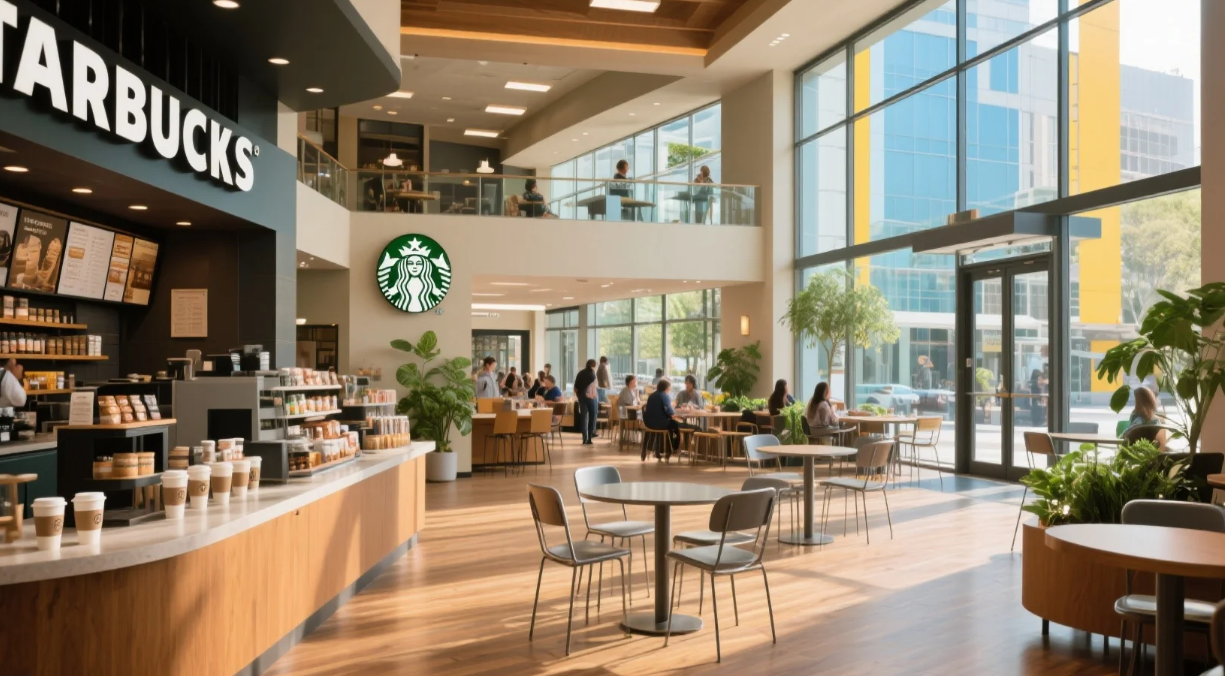
In January 2023, Starbucks was facing a quiet but serious institutional problem. Partner turnover in the U.S. had peaked at 65% the prior year, comparable store sales were declining, and a growing unionisation movement — which would eventually see workers at more than 500 stores organise — signalled deep dissatisfaction within the frontline workforce. The boardroom response was not unusual: Howard Schultz returned as interim CEO and initiated a "Reinvention" plan. What happened next, however, was more interesting than the plan itself.
Starbucks appointed Brian Niccol — architect of Chipotle's remarkable operational turnaround — as CEO in September 2024. Within weeks he had reframed the company's direction under a single phrase: "Back to Starbucks." The strategy was not primarily a product or pricing story. It was a talent and culture story. Niccol's first 100 days were spent not in boardrooms but in stores, talking to baristas. His conclusion, stated plainly in a letter to shareholders, was that Starbucks had drifted from its core identity, and that restoring the company meant restoring the experience of the people who run it.
That diagnosis — that partner experience and customer experience are inseparable — has been Starbucks' talent philosophy for three decades. What's changed is the urgency with which the company is trying to live up to it.
Detail | Data |
|---|---|
Founded | 1971, Seattle, Washington |
Headquarters | Seattle, Washington, USA |
Employees | 361,000 globally (FY2024); 381,000 as of FY2025 |
Revenue (FY2024) | $36.2 billion (flat year-over-year) |
Stores | 40,199 stores across 87 markets (end of FY2024) |
SCAP graduates | 14,000+ partners earned bachelor's degrees as of FY2024 |
Starbucks has consistently appeared on Fortune's World's Most Admired Companies list and in various best employer rankings, though its recent operating challenges — a 2% decline in comparable store sales in FY2024 and ongoing union negotiations — have complicated the narrative. What makes Starbucks genuinely instructive for HR leaders is not the absence of difficulty, but the longevity and structural ambition of its people programmes, and the candour with which the company acknowledges where gaps remain.
How does Starbucks attract and hire talent?
A values-before-skills hiring philosophy
Starbucks calls its employees "partners" — not as a branding exercise, but as a legal description. Since 1991, Starbucks has granted equity to its partners through the Bean Stock programme. As of FY2024, more than $2.4 billion in pre-tax gains have been distributed to partners through this scheme. The naming convention and the equity structure together encode the company's core premise: Starbucks cannot build a premium customer experience with a transactional workforce.
Hiring at Starbucks is structured accordingly. The company uses behaviour-based interviewing to assess cultural alignment before evaluating technical capability. Interview panels are deliberately constructed to reduce unconscious bias — a practice reinforced through the Hire Like Us training programme, which equips recruiters with structured techniques for candidate evaluation. The underlying logic is straightforward: barista skills can be trained in 40 hours; alignment with the Starbucks mission of community, belonging, and human connection cannot.
Inclusive hiring as a structural commitment
Where Starbucks distinguishes itself from many large employers is in the breadth and specificity of its inclusive hiring architecture. Rather than treating diversity hiring as a pipeline aspiration, Starbucks has built targeted programmes designed to remove structural barriers at the point of entry.
The Starbucks Inclusion Academy, now operating across more than 30 U.S. locations, partners with community organisations to train and hire neurodiverse candidates. The Pathways to Opportunity framework extends across several target populations: veterans and military spouses (with a commitment to hiring 5,000 annually in the U.S.), young adults without traditional work histories, and refugees. The Inclusion Academy model is notable because it does not simply lower selection thresholds — it provides pre-employment training so that candidates are genuinely prepared for the role before their first day.
In FY2024, Starbucks hired 80,865 baristas in the U.S. alone, according to the company's FY2024 Global Impact Report. The sheer scale of that hiring operation — across more than 16,000 U.S. locations — demands standardisation. Starbucks maintains that standardisation without sacrificing the qualitative assessment of cultural fit, which is operationally non-trivial for any company at this scale.
McDonald's faces a structurally similar challenge — high-volume, frontline hiring across thousands of franchise and company-operated locations — but has resolved it differently, placing greater emphasis on franchisee-led hiring than on central programme design.
Retention by design: the benefits architecture
Starbucks' retention strategy is most visible in its benefits package, which is structured to differentiate the company in the retail labour market. The key design principle is universality: eligibility for healthcare, Bean Stock grants, and the Starbucks College Achievement Plan (SCAP) begins after a partner works 240 hours over three consecutive months — the equivalent of roughly 20 hours per week. Most large retail and food service employers either exclude part-time workers from benefits or offer reduced benefit tiers.
The economic signal this sends is deliberate. According to a Benefit Index analysis conducted by Aon, cited in Starbucks' FY2023 Global Impact Report, Starbucks delivered more valuable total benefits for retail hourly partners than any of the more than 50 other U.S. companies included in the study — a group that included Fortune 200 and Fortune 500 employers. The value of extending full benefits to part-time workers extends beyond retention: it directly reduces the incentive for partners to seek additional employment elsewhere and increases hours-per-partner, which in turn improves service consistency.
📄 2025 AI Recruitment Casebook Scaling inclusive hiring at the volume Starbucks operates — tens of thousands of barista hires annually across 87 markets — increasingly requires technology that can standardise candidate assessment without reducing it to a filter. To see how companies across retail, tech, FMCG, and seven other industries are deploying AI at each stage of the recruiting process, download MokaHR's full AI Recruitment Report. Download the free report →
Trusted by: Tesla · NVIDIA · McDonald's · Nestlé · Schneider Electric
How does Starbucks develop and manage employee performance?
Barista First 30 and the Origin Experience
New partners begin their Starbucks career with the Barista First 30 programme — a 40-hour structured onboarding curriculum covering mission, culture, beverage craft, and customer service fundamentals, completed within the first month of employment. The programme's specificity (a defined number of hours, a defined time window) is characteristic of Starbucks' approach to learning: it treats training as an operational commitment rather than an aspiration.
Beyond onboarding, Starbucks invests in programmes that build identity and craft rather than simply competence. The Coffee Master programme takes partners through a deep curriculum on coffee origins, flavour profiles, and brewing methods. Those who complete the certification earn the right to wear a distinctive black apron — a visible signal of expertise that reinforces both pride in craft and differentiation within the store team. In FY2024, Starbucks selected 800 partners to travel to Hacienda Alsacia — the company's coffee farm in Costa Rica — for an Origin Experience immersion, down from 929 the prior year but still a substantial investment in frontline partner development.
The FY2024 Global Impact Report also recorded 3,185 enrolments in the Third Place Development Series, a leadership curriculum designed to prepare partners for store management and beyond. The programme is central to Starbucks' stated goal of filling 90% of U.S. retail leadership roles from internal partners.
The SCAP programme: education as a retention asset
No single Starbucks people initiative has received more sustained investment or attracted more external attention than the Starbucks College Achievement Plan. Launched in 2014, SCAP provides 100% upfront tuition coverage for benefits-eligible U.S. partners to earn a first-time bachelor's degree from Arizona State University online, across 150+ undergraduate programmes. The "upfront" element is significant: most employer tuition benefits work on a reimbursement model, requiring partners to carry the cost until graduation. Starbucks pays ASU directly.
As of FY2024, more than 14,000 partners have graduated through SCAP, and a further 26,000 are currently enrolled — participation is up 60% over the past five years, according to company data published in December 2025. The programme has since been extended through Pathway to Admission, created in response to data showing that one in five partners who applied to ASU were initially inadmissible due to their prior academic history. Under Pathway to Admission, Starbucks covers credit conversion costs for partners who need to build their academic eligibility before entering the degree programme.
The strategic logic of SCAP is not straightforwardly about retention — Starbucks explicitly states that there is no obligation to remain with the company after graduation. The bet is that access to a meaningful benefit builds the kind of institutional loyalty that outlasts the calculation of marginal wage differences with competitors.
Performance management: gaps in the data
Starbucks' internal promotion rate tells a more complicated story. According to the FY2024 Global Impact Report, 63% of U.S. retail leadership roles were filled from internal partners in FY2024 — an improvement from prior years, but materially below the company's stated 90% target. That gap is worth acknowledging. Starbucks has been transparent about it in its impact reporting, and it represents a genuine execution challenge: building a deep enough bench of store-ready leaders when baseline turnover rates remain at 49%.
The company uses 360-degree feedback mechanisms and manager coaching conversations as the primary performance development tools for store-level partners. For corporate roles, the transition to a more data-driven performance framework has accelerated under Niccol's leadership, including a restructuring that eliminated 1,100 corporate positions in early 2025 as part of a broader push for operational clarity.
Metric | FY2024 | FY2023 |
|---|---|---|
Total employee turnover (U.S. and Canada) | 49% | 58% |
U.S. retail leadership roles filled internally | 63% | 69% |
Barista onboarding hours (Barista First 30) | 40 hrs | 41.5 hrs |
SCAP graduates (cumulative) | 14,000+ | 12,000+ |
Current SCAP participants | 26,000+ | N/A |
Bean Stock pre-tax gains (cumulative) | $2.4 billion | — |
Source: Starbucks FY2024 Global Impact Report
What can HR leaders learn from Starbucks' approach?
Starbucks is not a straightforward model to replicate. Its scale, brand power, and financial capacity for programmes like SCAP are not available to most employers. But the structural principles that underpin its talent strategy are more transferable than they first appear.
Universalise benefits rather than tiering them. The defining feature of Starbucks' benefits architecture is not the generosity of any individual programme — it is that the same programmes are available to a 20-hour-per-week barista as to a full-time store manager. Tiered benefits, where part-time or junior employees access reduced packages, send an implicit signal about how much the company values different categories of its workforce. Starbucks' approach inverts this: it treats broad access as a retention mechanism and a recruitment differentiator. Companies reviewing their benefits structure should ask whether their eligibility criteria are effectively excluding the employees they most need to retain. AI-powered screening and onboarding tools can help HR teams identify which candidate segments are dropping out of the pipeline early — often a proxy for uncompetitive benefits at the point of offer.
Design for internal mobility from day one. Starbucks' stated goal of filling 90% of retail leadership roles internally is ambitious, and the company's current 63% rate shows it has not been reached. But the ambition itself shapes hiring, training, and role design in ways that compound over time. When managers know that their team will supply the next generation of store leaders, they invest differently in development conversations. Structured recruitment workflows that track candidate progression from first hire through to leadership consideration — rather than treating each hire as a discrete event — give HR teams the data to identify high-potential partners before positions open. Recruitment pipeline analytics can make this internal talent mapping systematic rather than dependent on individual manager judgment.
Treat craft as a culture-building tool. The Coffee Master black apron and the Origin Experience trips to Hacienda Alsacia serve a function that goes beyond skill development. They create visible, earned markers of progression and expertise — and they create a shared professional identity among people who might otherwise experience their role as purely transactional. Employers in industries where frontline roles can feel undifferentiated — retail, hospitality, logistics — should examine whether their training programmes build craft identity or merely competence checklists. The distinction has measurable effects on retention. Spotify takes a similar approach to individual contributor identity — investing in the professional development of individual contributors rather than channelling all growth resources into the management pipeline.
Acknowledge difficulty honestly. The gap between Starbucks' 90% internal promotion aspiration and its 63% actual rate, the ongoing union negotiations, the 49% turnover figure that — despite improvement — remains high by any benchmark: Starbucks publishes all of this. That transparency is itself a talent strategy. HR professionals reading impact reports look for honest disclosure as a signal of organisational maturity. Companies that present only their achievements in external people data forfeit the credibility they are trying to build.
What is it like to work at Starbucks?
The "Back to Starbucks" strategy is, at its core, a culture restoration project. Niccol's diagnosis — that the company had become "too transactional" — pointed to a store environment where baristas were producing complex, heavily customised drinks at high volume with inadequate staffing and limited time to connect with customers. The investments announced under the strategy include simplified menu complexity, new equipment to reduce drink production time, and additional staffing hours — all of which are framed as improvements to the partner experience as much as the customer experience.
The physical environment is part of this: Starbucks has committed to reintroducing elements of the "third place" feel — comfortable seating, handwritten names on cups, open laptop culture — that defined the brand before the shift to drive-through-first formats. In FY2024, the company introduced the first-ever North America Barista Championship, a competition designed to celebrate craft and community among store-level partners. It is a relatively small initiative, but it is illustrative of the kind of signal Starbucks is trying to send: that being a barista is a skilled, respected role, not a temporary position.
The challenges, however, are real. The unionisation movement, which began in Buffalo in late 2021, has resulted in more than 500 stores organising under Starbucks Workers United. Collective bargaining negotiations have been protracted. The company has, at various points, been accused of retaliating against union organisers — allegations it has disputed. For HR leaders studying Starbucks, the union story is at least as instructive as the SCAP programme: it illustrates what happens when partner experience aspirations consistently fall short of lived reality at the store level.
The company's mental health support provision has expanded in recent years, with free counselling sessions available to partners and immediate family members through the employee assistance programme. Flexible scheduling and childcare subsidies are also part of the benefits package. Starbucks has committed to pay equity across gender and racial lines in the U.S., and FY2024 data confirmed the company had maintained 100% gender and racial pay equity.
Frequently asked questions
How does Starbucks hire employees? Starbucks uses behaviour-based interviewing to assess cultural alignment before evaluating technical skill. Hiring panels are structured to reduce unconscious bias, and the company actively recruits through its Pathways to Opportunity programmes, which target veterans, young adults with limited work history, and neurodiverse candidates. The Starbucks Inclusion Academy, now active across 30+ U.S. locations, partners with community organisations to source and train candidates from underrepresented groups.
What is the Starbucks College Achievement Plan? The Starbucks College Achievement Plan (SCAP) provides 100% upfront tuition coverage for benefits-eligible U.S. partners to earn a first-time bachelor's degree from Arizona State University online. Partners can choose from 150+ undergraduate degree programmes. As of FY2024, more than 14,000 partners have graduated through the programme, with a further 26,000 currently enrolled. Partners become eligible after working 240 hours over three consecutive months — the equivalent of roughly 20 hours a week.
What percentage of Starbucks leaders are promoted internally? According to Starbucks' FY2024 Global Impact Report, 63% of U.S. retail leadership roles were filled from internal partners — against a stated goal of 90%. While the company has not yet reached its target, the internal mobility rate is significantly higher than the retail industry norm, and Starbucks has made internal progression the explicit centrepiece of its talent development philosophy through programmes such as the Third Place Development Series.
What is Starbucks' approach to employee turnover? Total employee turnover (U.S. and Canada combined) fell from 65% in FY2022 to 49% in FY2024, according to Starbucks' FY2024 Global Impact Report. CEO Brian Niccol has attributed recent progress in part to investments in store partner wages and benefits made under the "Back to Starbucks" strategy, which explicitly identifies partner experience as inseparable from customer experience. Starbucks also tracks partner engagement through a Partner Experience Survey, which achieved 100% participation in FY2024.
See also:
Talent & Culture Strategy at IKEA: Where Values Are the Hiring Criteria
Talent & Culture Strategy at Lululemon: When Your Store Associates Are Called Educators
Ready to build the kind of internal mobility and benefits architecture that Starbucks has made a retention cornerstone? MokaHR's AI-powered ATS helps HR teams map internal talent pipelines, standardise inclusive hiring workflows, and track progression from first application to leadership. Book a personalised demo →
From recruiting candidates to onboarding new team members, MokaHR gives your company everything you need to be great at hiring.
Subscribe for more information
© Copyright 2025 MokaHR - All Rights Reserved.