Key Takeaway:
The right ATS for a Malaysian company is not the one with the most features, but the one that best fits how you actually hire. Evaluate every vendor across five fits:
-
Compliance fit — PDPA-ready data access, retention, and cross-border transfer controls. Treat this as a pass-or-fail gate, not a scored factor.
-
Local market fit — local job boards, multilingual hiring, and the channels Malaysian candidates actually use.
-
Ecosystem fit — integration with candidate engagement channels, your collaboration tools, and HRMS.
-
Capability fit — full workflow coverage first, then depth where your biggest hiring pain sits.
-
Commercial & implementation fit — transparent pricing, a realistic go-live timeline, and support in your timezone.
Not sure what to look for when choosing an ATS in Malaysia?
We provide a practical framework to help you evaluate your options and find the right fit for your hiring needs.
This article doesn't give you another list of the best ATS in Malaysia. Instead, it focuses on the key factors that matter when evaluating an ATS for the Malaysian market.
You'll also learn which fits to consider when evaluating whether an ATS is the right fit for your hiring needs.
If you already have an HRMS but are still unclear about the core value of an ATS, start with another guide: HRMS vs. ATS in Malaysia.
To make the evaluation easier, we've broken these factors down into five key fits.
Five Fits That Matter for Malaysian companies
Compliance fit: can it stand up to Malaysia's data rules?
Recruitment compliance is non-negotiable. An ATS must meet Malaysia's local requirements for handling candidate data, making compliance a must-have rather than a nice-to-have. From a compliance perspective, evaluate an ATS across two areas: data access and retention, and data residency and cross-border transfers.
Data access and retention
Malaysia's PDPA sets requirements for how candidate data is managed and retained. Under the Personal Data Protection (Amendment) Act 2024, now in force, breaching the data protection principles can draw a fine of up to RM1 million, making access and retention controls a critical ATS consideration.
As a data processor, your ATS provider should help you control candidate data by showing who can access each record, why it is retained, and when it should be deleted.
When evaluating an ATS, check whether it supports:
- Role-based access controls
Ensure each user can only access the candidate data required for their role. For example, recruiters may need to view candidate resumes but not salary information or other sensitive data.
- Automated retention and deletion rules
Allow you to set data retention policies and automatically delete candidate records when the defined retention period ends, rather than keeping all candidate data indefinitely. For example, candidate records could be retained for 12 months after an unsuccessful application and then automatically deleted.
- Audit trails
Record who has viewed or changed a candidate’s profile and when, with a clear history of data access and changes.
Data residency and cross-border transfer
Many platforms host in Singapore or elsewhere in the region, which the law allows. Under Malaysia's 2025 cross-border guidelines, data may leave the country only where the destination offers comparable protection, or a safeguard such as Standard Contractual Clauses covers the move. What you owe a regulator, and the candidate, is a clear account of where each record sits and which mechanism legitimises its transfer.
Ask your ATS vendor for:
-
A named hosting location, ideally an in-region option.
-
A current list of sub-processors and their sites.
-
A signed DPA with SCCs or equivalent safeguards.
-
Transfer wording you can lift straight into your candidate privacy notice.
How to assess it
-
Pass: The ATS provides clear access controls, retention and deletion policies, audit trails, a defined data hosting location, and a clear mechanism for any cross-border transfers.
-
Fail: The vendor cannot clearly demonstrate these controls or explain where candidate data is stored and how cross-border transfers are covered.
Local market fit: was it built for how Malaysia actually hires?
Malaysia's hiring market has its own rules, so the first thing to test is how well an ATS understands them. Look at how deeply it fits the local market: whether it integrates with local job boards and supports the languages you hire in.
Local Job Boards
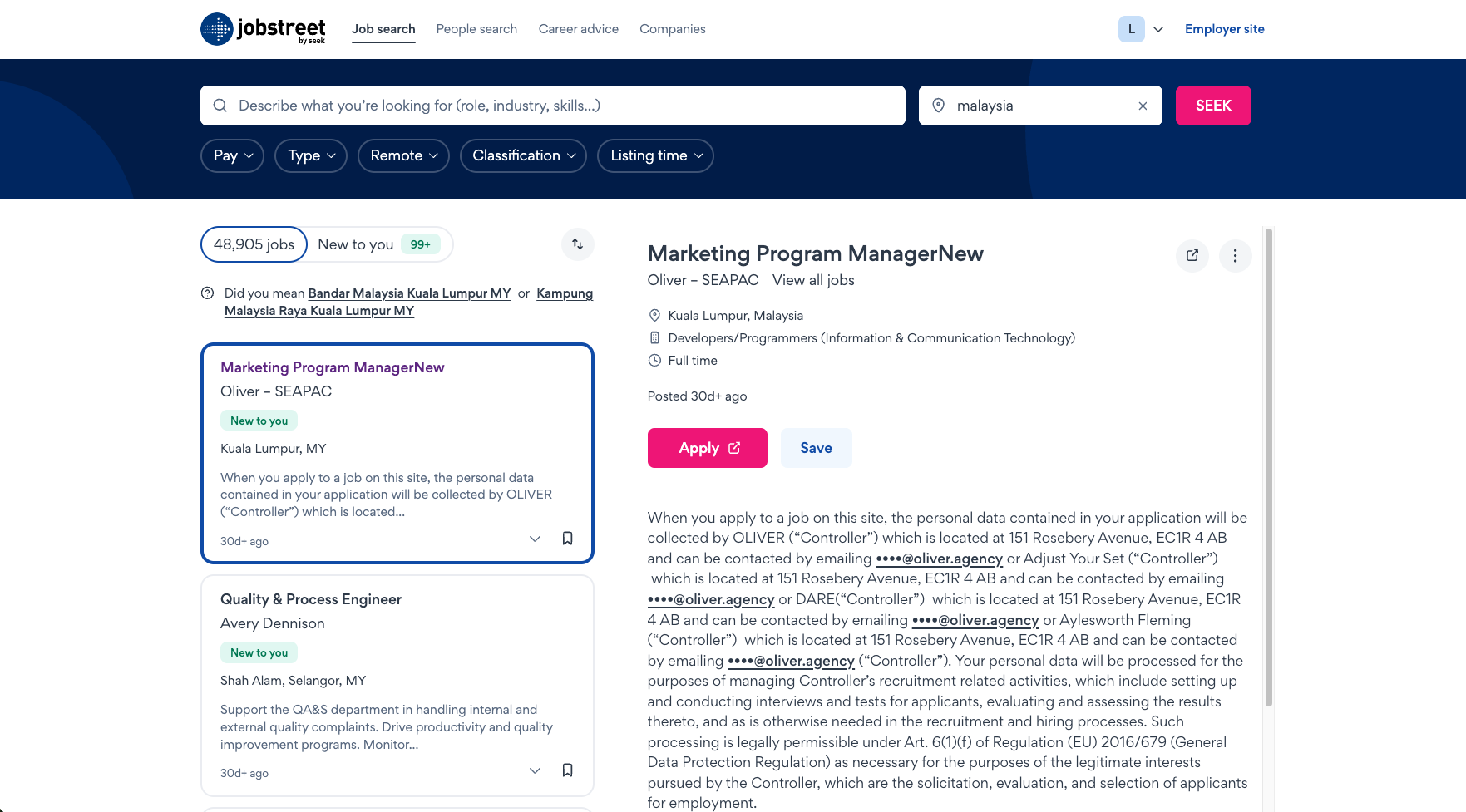
Start with the job boards your hiring team relies on. In Malaysia, common hiring channels include JobStreet by SEEK, LinkedIn, Maukerja, Ricebowl, and Hiredly.
When evaluating an ATS, check whether it connects with the platforms most widely used in the local market and lets you publish jobs across multiple channels from a single system. It's worth paying close attention to local job board support, as it can make a real difference to the experience of posting jobs and collecting resumes.
Language Support
Malaysia's workforce spans Malay, English, Mandarin, and Tamil, which makes multilingual hiring an important factor when choosing an ATS.
For recruiters, check whether the platform can handle resumes in different languages. It should also support translation when needed, as well as multilingual screening and interviews. This helps hiring teams evaluate candidates more consistently across different language backgrounds.
Candidate-facing support matters just as much. Check whether job pages, application forms, and other key touchpoints can be presented in the languages your applicants use.
An ATS may offer a multilingual recruiter interface, but if candidates still have to complete the application process in English, the overall hiring experience remains limited.
Candidate Communication Channels
Local communication channel support is a good indicator of the market fit. In Malaysia, candidate sourcing can span Facebook groups, WhatsApp, referrals, walk-ins, and traditional job boards, depending on the role and hiring needs.
Beyond channels, look closely at the ATS's mobile support. Can candidates apply easily from their phones, without needing to switch to a desktop?
From the recruiter's side, check whether recruiters can review, screen, communicate with, and move candidates forward from mobile devices, especially when handling high-volume hiring.

How to Score It
-
0 points: Covers only global job boards and operates in English only.
-
1 point: Covers local job boards and multiple languages, but lacks some local communication channels.
-
2 points: Supports local job boards, the four main languages, social and mobile sourcing.
Ecosystem fit: does it connect to the tools you already run?
Market fit asks whether a system suits how Malaysia hires; ecosystem fit asks whether it works inside the tools your team and candidates already use. Get it wrong and every other strength leaks away between systems.
To assess ecosystem fit, look at how well the ATS connects with the tools already embedded in your hiring workflow.
Three types of connections are especially worth looking at: candidate engagement channels, collaboration tools, and HRMS.
Candidate engagement channels, such as WhatsApp, so candidate conversations can flow back into the candidate record rather than staying on a recruiter’s phone.
Your collaboration tools, such as Lark and Slack, so approvals, scheduling, and feedback happen where your team already works. And your HRMS, so a signed hire flows into payroll without rekeying.
This is the dimension buyers most often overlook, because integrations rarely headline a demo.
But when they are weak, the workflow stays broken: your team hops between systems and loses in manual syncing the time the ATS was supposed to save.
How to score it:
-
0 points: Operates largely as a standalone system, with key tools or channels disconnected.
-
1 point: Integrates with some key tools, but at least one daily-used system still requires manual work or separate workflows.
-
2 points: Connects with your key communication channels, collaboration tools, and HRMS, with conversations and hiring data flowing back automatically.
Capability fit: does it solve your real problems?
Start with the floor. The system should cover every core stage in one place: requisition, approval, posting, sourcing, screening, scheduling, scorecards, offer, and handoff. If any step still lives outside the system, it fails this test, whatever else it offers. That is pass-or-fail, not a differentiator.
Above the floor, more is not better. The right system solves your problem, not simply the one with the longest feature list. Once the basics are covered, identify your biggest hiring pain and assess which capabilities directly address it.
Common examples include:
If you hire at high volume, prioritise screening and automation. Look for semantic screening and a reliable AI first pass. Whatever the demo promises, hiring should stay accelerated by AI and decided by humans—so recommendations should always be explainable and reviewable.
If visibility is the challenge, prioritise analytics. Look for live dashboards for pipeline, conversion, source effectiveness, and time to fill, with easy report exports.
In the demo, bring a real hiring scenario and see whether the system can solve it in practice.
How to score it:
-
0 points: Fails the baseline or cannot demonstrate the capability needed to address your biggest hiring pain.
-
1 point: Meets the baseline and addresses the core pain, but with limited depth, usability, or flexibility.
-
2 points: Meets the baseline and clearly solves the core pain, with strong usability, explainability, and workflow fit.
Commercial & implementation fit: do you know the real cost, and how fast it goes live?
The final fit comes down to three practical questions: what will you pay, how quickly can you go live, and what support will you get along the way? These details are easy to overlook, but they can have a major impact after you sign.
- Pricing transparency
Vendors use different pricing models, so headline numbers rarely compare directly. Before comparing quotes, understand how each model works:
Beyond the base subscription, check whether implementation, additional modules, and other paid features cost extra.
Ask the vendor to clearly outline the full cost structure rather than quoting only a monthly price. Vendors that are transparent about costs upfront are generally easier to evaluate and compare.
- Implementation timeline
Ask two questions: how long until core hiring goes live, and who supports you through setup. A focused rollout usually takes four to eight weeks, with advanced modules added later. The timeline depends less on the software than on how quickly your team aligns on workflows, data, and configuration. Look for a named implementation contact and a written rollout plan, rather than relying on a promised go-live date alone.
- Support coverage
Support coverage comes down to one question: when a hiring workflow breaks, can you reach the right person fast?
A vendor twelve hours away may not respond to an urgent Monday ticket until their Sunday night. Confirm that support is available during your working hours and comes from people who understand local hiring. Ask where the support team sits and what response time is committed in writing.
How to score it:
-
0 points: Pricing is unclear, implementation has no defined timeline or owner, or support does not adequately cover your working hours.
-
1 point: Two of the three are clearly defined.
-
2 points: Pricing is clearly documented, you have a named implementation contact and rollout plan, and support is available during your working hours.
Moka AI: The Best ATS for Malaysian Hiring
Moka AI is an AI-native applicant tracking system (ATS) built for the APAC hiring ecosystem. Here is what gives it an edge for Malaysian teams.
Built for How Malaysia Hires
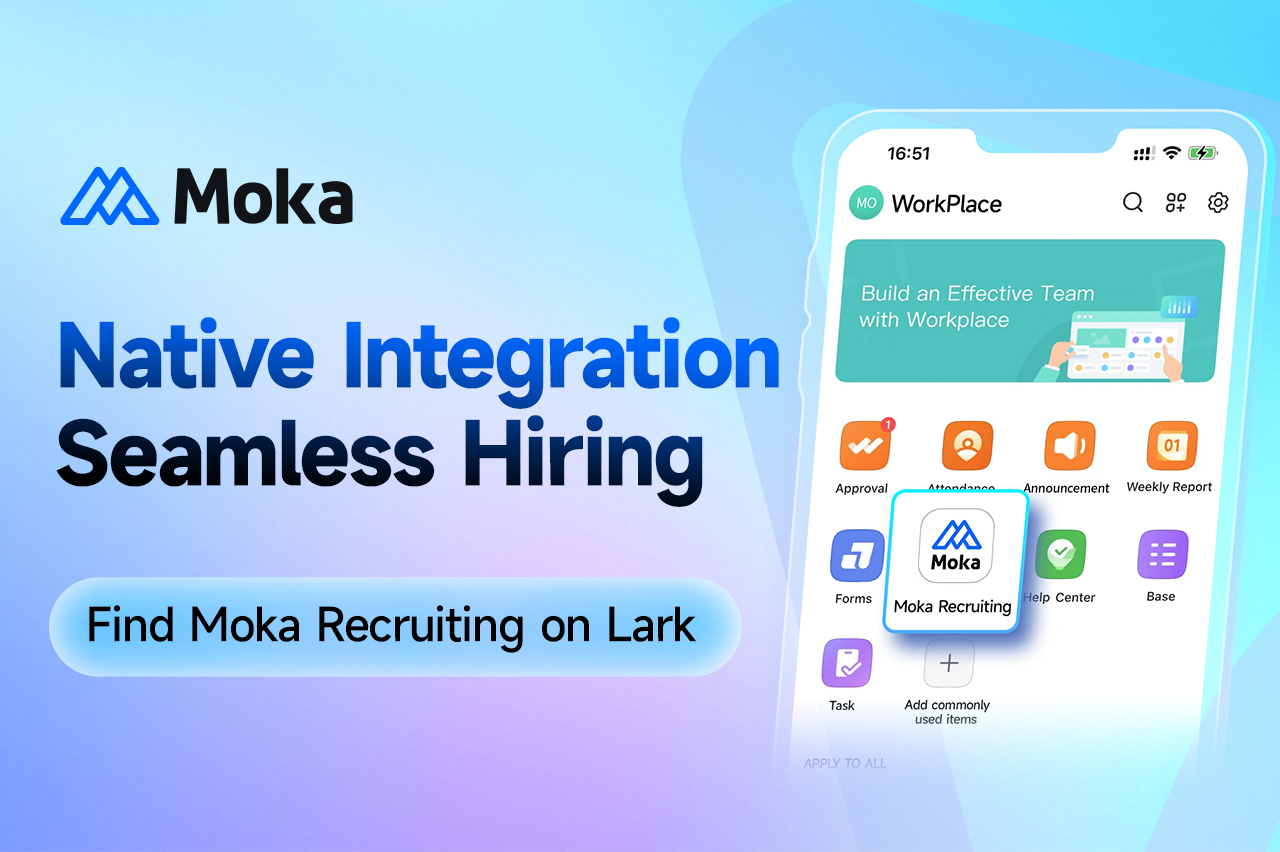
Moka AI deeply understands the Malaysian hiring market and connects across the local hiring ecosystem—from candidate engagement channels and job boards to HR tech. It integrates with tools local teams already use, including JobStreet by SEEK, LinkedIn, WhatsApp, Lark, Microsoft Teams, and more.
Traveloka shows this in practice. Hiring across nine APAC markets, including Malaysia, it connected WhatsApp, Lark, and HackerRank through Moka AI to turn separate tools into one connected workflow for regional hiring. Learn how Traveloka automated its hiring workflows with Moka AI.
Enterprise-Ready Compliance for Malaysia
Moka AI helps Malaysian businesses meet local data compliance requirements, with candidate data hosted on Singapore servers and controls for role-based access, data retention and deletion, and audit trails. It supports recognised security and privacy frameworks, and can explain the mechanism covering any cross-border transfer rather than leave you to work it out.
Complete Hiring Workflows, Powered by AI
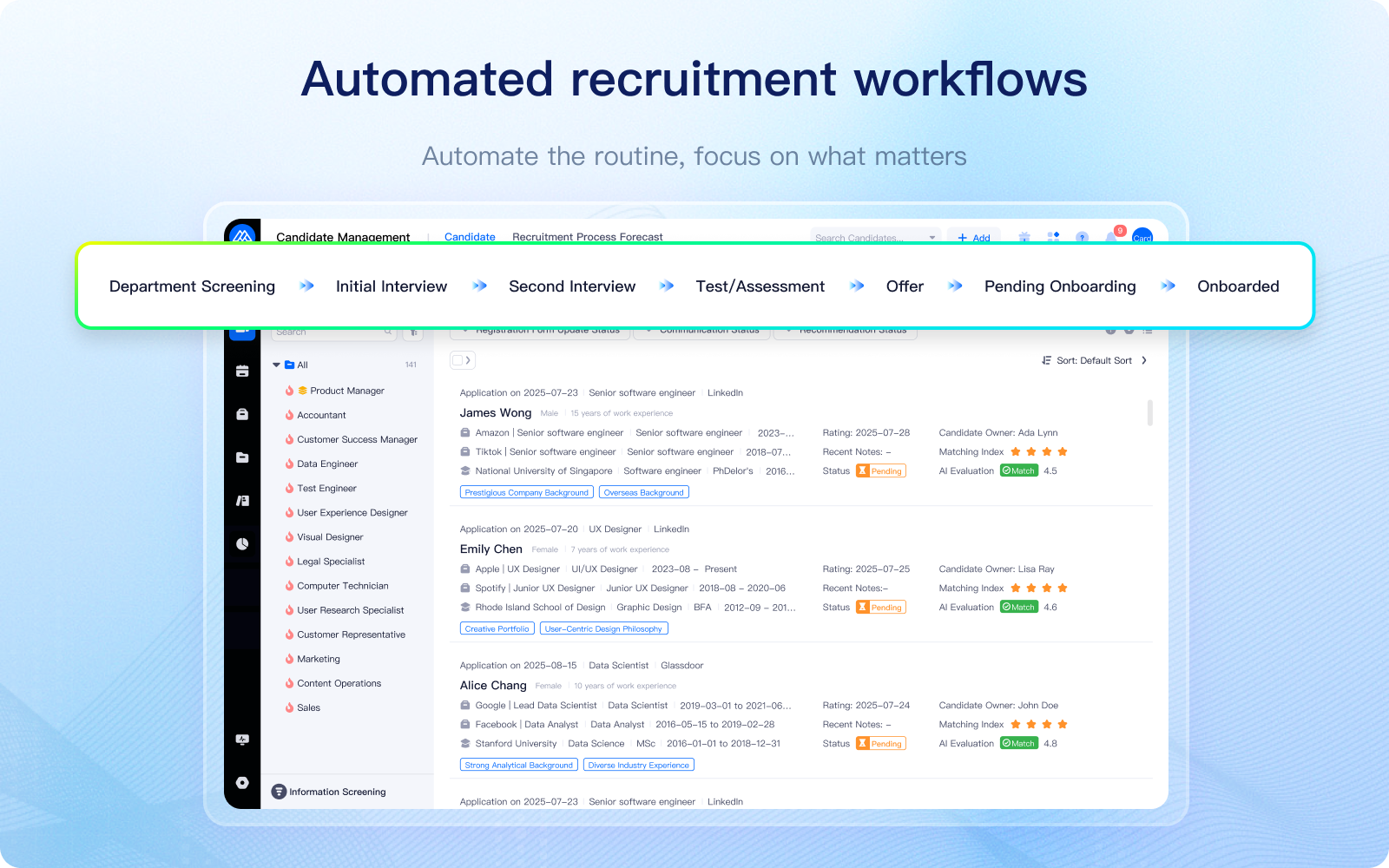
Moka AI gives you strong, streamlined control over the entire hiring workflow. Track your pipeline stage by stage and see exactly where each candidate stands, with centralised workflows and data keeping the whole process visible in one place.
AI runs throughout that workflow, including AI Screening, AI Interview, AI Interview Summary, AI Chatbot and more, taking on repetitive work to keep hiring moving. AI helps accelerate the workflow while recruiters stay in control of the hiring decisions.
Learn more about AI recruitment solutions here.
Find the Right Fit for Your Hiring Team
The right ATS is rarely the one that scores highest on paper. It is the one that scores highest on what matters to you.
Run each shortlisted vendor through the five fits. Score the four weighted fits 0, 1, or 2, and treat compliance as a separate pass-or-fail gate: rule out any vendor that cannot meet Malaysia's data requirements before scoring the rest.
With compliance settled, weight the remaining four fits by what your hiring actually demands. Decide which of these are must-haves and which are merely nice-to-haves before you compare. This means a vendor can still be the better choice if it performs well in the areas that matter most to you, even if it is weaker in areas you rarely use.
There is no single best ATS for every team. The right one is the one that fits your hiring reality. Use the framework above to identify what matters most to your team, then choose the system that delivers where it counts.
FAQ
How much does an ATS cost in Malaysia?
There is no single sticker price, since ATS vendors bundle features and bill differently. What matters more than the monthly figure is the total annual cost: add implementation, onboarding, add-on modules, and renewal increases to the base subscription, then compare vendors on that yearly total rather than the monthly sticker. A quote that looks cheap per month can turn out far more expensive once a full year is counted.
Which ATS pricing model is right for my company?
It depends on how you hire, not just how big you are. Per-user pricing stays cheap with a small recruiting team but climbs as you add hiring managers and interviewers. Per-headcount pricing is predictable but rises with company size even in a quiet hiring year. Usage-based pricing suits seasonal or high-volume recruiting but peaks in your busiest year. Map each quote to how your team actually hires before deciding which model works in your favour.
Can I claim an ATS under HRD Corp or a government grant in Malaysia?
The software itself, usually not; the training around it, often yes. The HRD Corp levy funds approved training, not software subscriptions, so it can cover onboarding your team on a new system but not the licence. For the tool, the MSME Digital Grant MADANI offers 50% matching up to RM5,000 through an MDEC-registered provider, though it targets smaller companies and its funding windows open and close, so verify the current round with BSN or MDEC before you budget. For most mid-sized employers, the honest plan is to budget for the platform and use HRD Corp for the training that makes it stick.
How do I know if an ATS is worth the price?
Value comes from what an ATS removes, not the features it lists. Estimate the recruiter hours saved on screening and coordination, the value of faster time-to-fill, and the compliance risk reduced through proper data controls. A cheaper system that your team abandons can cost more than a well-fitted one they use every day, so judge price against fit and adoption, not feature count.