A five-person TA team is hiring for Singapore, Kuala Lumpur and Jakarta at the same time. Most of its week goes not to interviews but to booking them across time zones, chasing candidate replies on WhatsApp and email, and copying resumes from JobStreet into the ATS. Now leadership wants twice the hires with the same headcount.
Recruitment automation tools promise to take that work away. But five of the six top-ranking lists of recruiting automation software we reviewed were written by vendors, and most of them assume a US hiring team. They rarely ask whether automation still works when candidates reply on WhatsApp, jobs go to local job boards and each country runs its own approvals.
This guide covers:
Moka AI publishes this blog and appears on the list. Details for other vendors come from their official websites, checked in November 2026, so confirm anything that matters to you in a demo.

Much of a recruiter's week goes to calls, messages and scheduling rather than interviews.
Photo: Vitaly Gariev on Unsplash, Unsplash License https://unsplash.com/photos/rlaeA80SunU
1. Recruitment automation tools at a glance
The table shows what each tool automates and what it offers APAC hiring teams. Tools are listed in the same order as the reviews in section 5; the order is not a ranking.
| Tool | Best for | What it automates | APAC fit | Pricing model |
|---|---|---|---|---|
| Ashby | Automated scheduling and recruiting analytics | Self-scheduling, panel auto-scheduling, AI application review | Verify in demo | Published entry plan; AI credits |
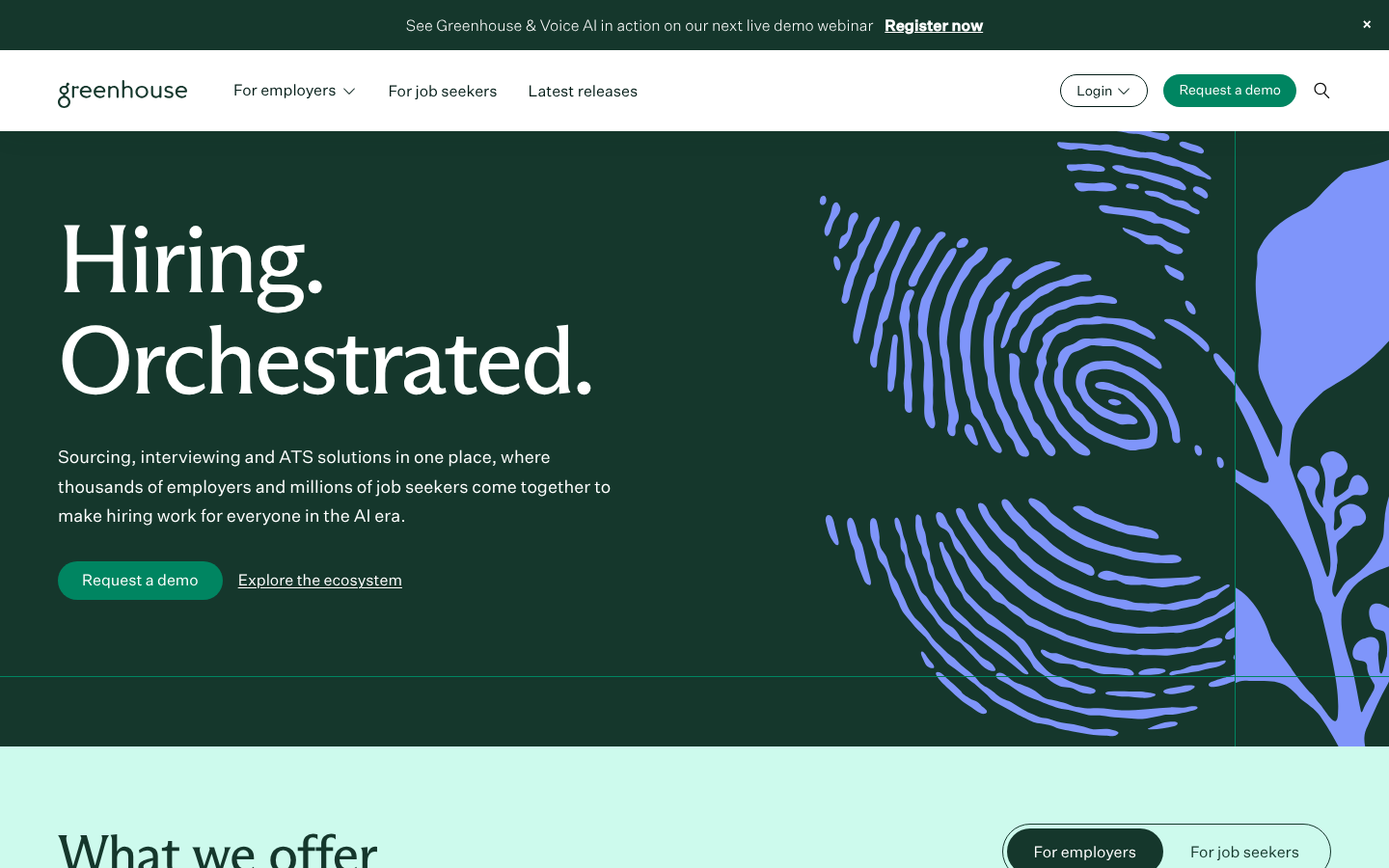
| Greenhouse | Structured, rules-based hiring workflows | Scheduling rules, self-scheduling, multi-day panels | Verify in demo | Quote-based (Core, Plus, Pro) |
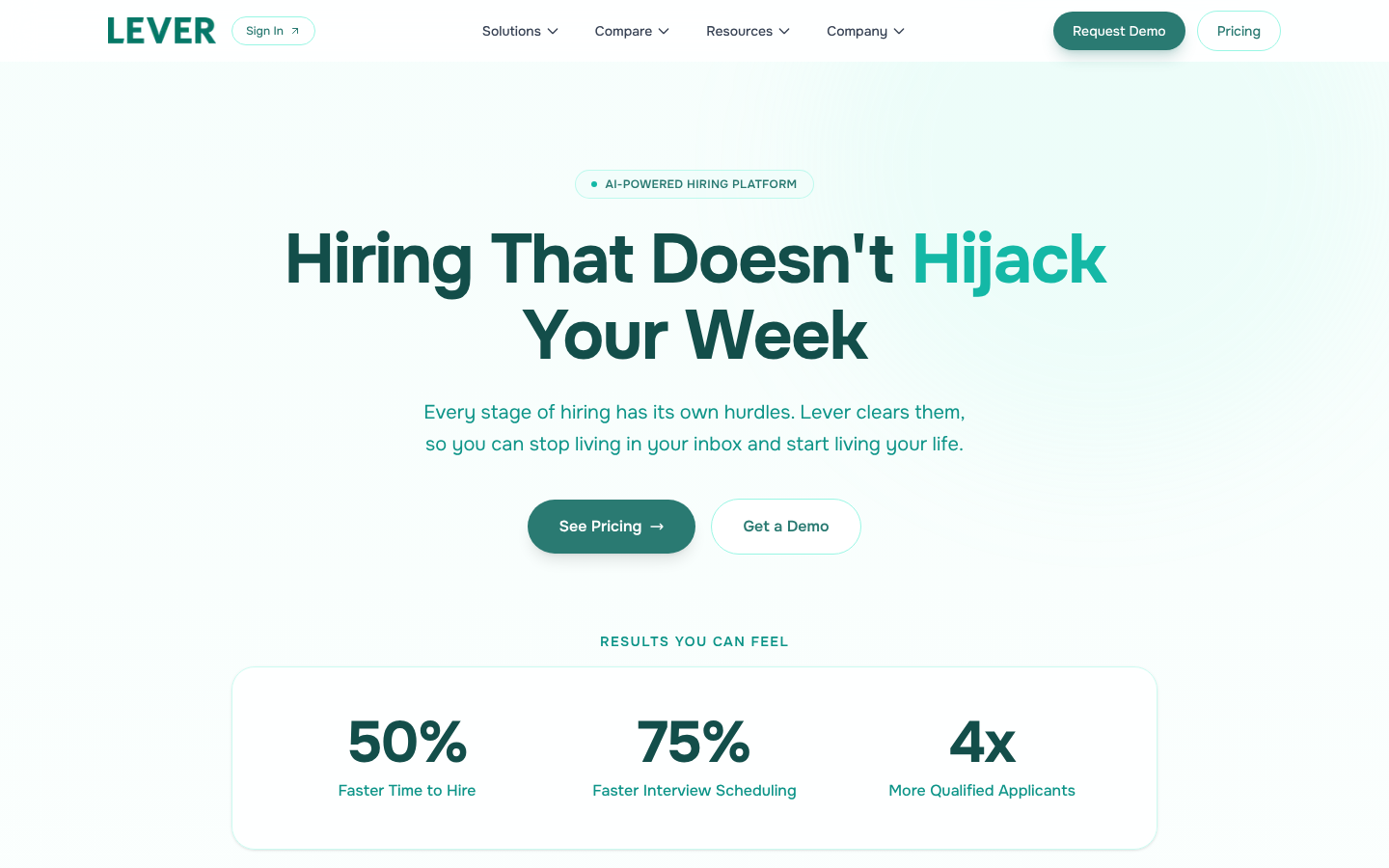
| Lever | Combining ATS pipelines with candidate nurture | Nurture campaigns, scheduling, follow-ups, 200+ job boards | Verify in demo | Quote-based, by team size |
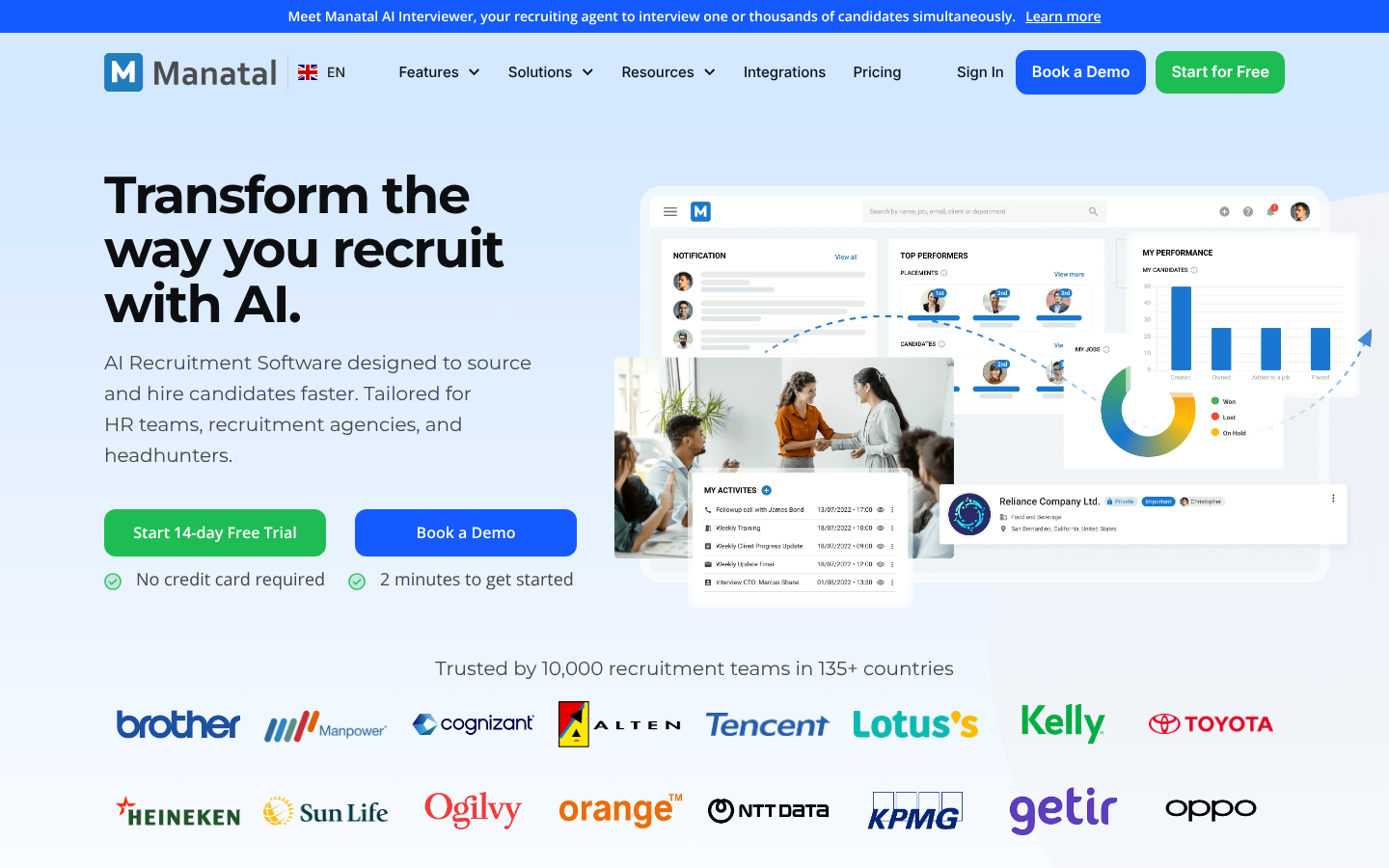
| Manatal | AI candidate matching from your talent pool | AI recommendations, profile enrichment, 2,500+ posting channels | Posts to JobStreet, JobsDB and SEEK | Published per-user plans |
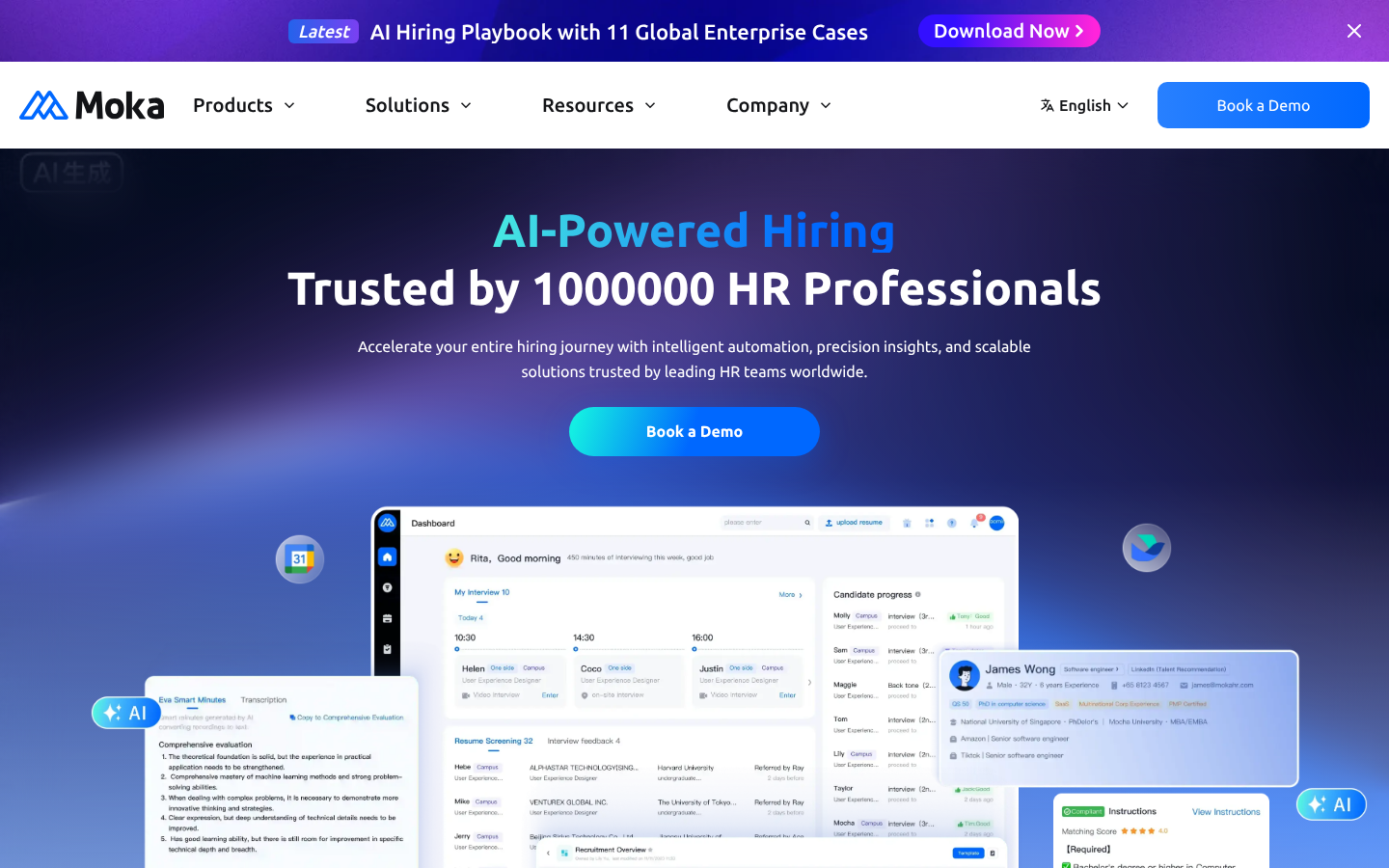
| Moka AI | End-to-end automation on WhatsApp and Lark | WhatsApp screening and scheduling, AI screening, approvals | WhatsApp Agent, JobStreet, Lark, Singapore hosting | Quote-based |
| SmartRecruiters | High-volume enterprise hiring workflows | Winston matching, screening, chat and interview booking | WhatsApp chat; Australia data center | Quote-based; Winston Chat add-on |
| Workable | Automated job posting and AI screening | Agent sourcing and screening, 200+ job boards | Posts to JobStreet, JobsDB and SEEK | Published plans; agents use AI credits |
| Gem | Sourcing sequences and talent rediscovery | Outreach sequences, AI sourcing, rediscovery, interview booking | Verify in demo | Custom, based on headcount |
| hireEZ | Open-web sourcing and outreach | Agent sourcing, rediscovery, screening, email campaigns | Verify in demo | Published solo plan; enterprise quote |
| Lexiom | Always-on AI sourcing per open role | Sourcing, candidate scoring, personalized email outreach | Verify in demo | $149 per agent per month |
| GoodTime | Multi-panel interview scheduling | Panel and multi-day scheduling, interviewer load balancing | Verify in demo | Quote-based, by annual candidates |
| Paradox | Conversational screening in frontline hiring | Chat applications, screening, interview scheduling | WhatsApp screening; 30+ languages | Quote-based |
| Eightfold AI | Skills-based matching at enterprise scale | Skills matching, AI interviews, candidate concierge | WhatsApp concierge; 24+ languages | Quote-based |
2. What recruitment automation software does, and where it should stop
Recruitment automation software hands repeatable hiring steps to software, so recruiters can spend their time on work that needs judgment. The real question is which steps to hand over, and which decisions to keep.
2.1 What you can automate across the hiring funnel
Each stage can be automated in two ways. Rule-based automation follows if-then rules you set. AI-powered automation reads resumes and replies, then recommends or drafts the next step. The first row is the job of sourcing automation software, which works before anyone applies.
| Stage | What gets automated | Rule-based example | AI-powered example |
|---|---|---|---|
| Sourcing and outreach | Candidate search, outreach sequences, follow-up reminders | Send a second email after three days without a reply | Recommend candidates for a role and draft personalized outreach |
| Job posting and distribution | Publishing one job to several job boards and social channels | Post the job as soon as it is approved | Draft a job description from the role requirements |
| Screening and matching | Filtering, scoring and ranking applicants | Flag applicants who miss a must-have requirement | Rank applicants against the role criteria and explain why |
| Interview scheduling | Self-scheduling, multi-interviewer panels, reminders and rescheduling | Send a booking link when a candidate passes screening | Arrange multi-round interviews around calendars and time zones |
| Candidate communication | Status updates, answers to questions, screening in chat | Notify candidates whenever their stage changes | Answer candidate questions in chat and run screening questions |
| Offers and handoff | Offer approvals, e-signatures, new-hire data sync | Generate the offer once approvals are complete | Draft the offer letter from approved terms and flag anything outside the approved range |
| Reporting | Funnel metrics, time per stage, source performance | Email a weekly report to hiring managers | Point out the stage where most candidates drop out |
Most all-in-one platforms cover five or more of these stages, while point tools go deeper in one or two. For APAC teams, scheduling and candidate communication stall most often, because interviewers sit in different time zones and candidates reply on chat apps.
 Mapping each hiring step shows which ones follow fixed rules and which need judgment.
Photo: Paymo on Unsplash, Unsplash License https://unsplash.com/photos/JXyY3jRV9oI
2.2 Rule-based workflows, AI automation and AI agents
Rule-based workflows run the if-then steps you define. They are predictable and easy to audit, but they stop at anything the rule did not anticipate, such as a candidate who replies with a question instead of picking a slot.
AI automation reads unstructured input, such as resumes and candidate messages, and returns a recommendation with its reasons. AI agents go further and chain several steps on their own. Workable describes its agent as sourcing, screening and engaging candidates inside its ATS, and hireEZ's EZ Agent covers sourcing through scheduling.
Wherever a tool sits on that spectrum, automation should stop before the decision. Let software organize, rank, ask questions, book interviews and follow up. Leave rejections and hiring decisions to people who can see why the AI ranked a candidate the way it did. The employer stays accountable for automated processing (see the compliance factor in section 3).
2.3 All-in-one platform or point tools?
Three kinds of software show up when you search for recruitment automation. An applicant tracking system (ATS) manages jobs and applicants from application to offer. A recruiting CRM manages people before they apply, through talent pools and nurture campaigns. A point automation tool goes deep on one step, such as sourcing, scheduling or conversational screening.
An all-in-one ATS automates several steps on the same candidate record, so no data has to move between systems. Point tools go deeper in one stage, but each one adds another data sync to maintain and another bill to pay.
A simple rule helps. If your bottleneck sits in one stage, add a point tool that writes back to your ATS. If manual work is spread across several stages, move to an all-in-one platform first. For more on that choice, see our guide to the best ATS software for APAC.
3. How to choose recruitment automation software for APAC hiring
Pick the wrong tool and the manual work does not disappear. It moves, from booking interviews to fixing failed bookings, or from sending messages to copying replies back into the ATS. Score each tool on these five factors, in this order, and test each one with the demo question beside it.
| Factor | What to check | Ask in the demo |
|---|---|---|
| 1. Your biggest time sink | Which stage takes the most recruiter hours: scheduling, screening, follow-ups or data entry. Match the tool to that stage. | "After customers go live, which stage saves the most time, and how do you measure it?" |
| 2. Automation that runs on its own | Whether each step finishes without anyone clicking, and how exceptions are handled. Test it on your own process. | "Take one of our roles from application to interview. Which steps need someone to click?" |
| 3. Local channel and workflow fit | Chat channels such as WhatsApp, local job boards, approvals by country, time zones, and tools such as Lark or Teams. | "Can Malaysia and Hong Kong roles follow different approvals? When a candidate replies on WhatsApp, does the next step start?" |
| 4. Data compliance and AI governance | Data hosting, retention settings, human review before rejection, audit logs and the documents the vendor can provide. | "Does any step reject a candidate before a person has looked? Can we switch it off?" |
| 5. Pricing model vs your volume | Per seat, per job, per credit or per AI interview, and whether AI features cost extra. | "What happens to our bill when applications double?" |

Score each shortlisted tool against the same five factors, using one of your own roles.
Photo: Vitaly Gariev on Unsplash, Unsplash License https://unsplash.com/photos/YDWdxElP3XI
Start with where the time goes. Automation is worth the manual hours it removes. Before any demo, ask each recruiter to log a typical week and find the stage that eats the most time. Then check whether a tool can finish that stage unattended. A tool that only sends a reminder, so someone still has to click a button, saves far less than the demo suggests.
Then check that it works locally. In APAC, automation often breaks at the last step. Candidates ignore email, jobs cannot reach the local boards they use, and each country needs its own approval chain. If a tool only automates email and US job boards, your recruiters will drift back to doing the work by hand. Run your test on the channel and job board your candidates use in each market.
Look hard at compliance and AI governance. The more you automate, the more candidates are processed before anyone looks at them, so notice, review and retention matter more. Singapore's PDPC addresses this in its Advisory Guidelines on Use of Personal Data in AI Recommendation and Decision Systems (March 2024). It encourages organisations to explain "the function of their product that requires collection and processing of personal data" (paragraph 9.5), so your candidate privacy notice should say which steps are automated and what data they use. It also states that "organisations bear the primary responsibility for ensuring that the AI System they have chosen to use can meet their obligations under the PDPA" (paragraph 11.8). The vendor builds the automation, but you remain accountable as the employer. Elsewhere, Indonesia's Personal Data Protection Law (Law No. 27 of 2022) gives candidates the right to object to decisions based solely on automated processing (Article 10) and requires an impact assessment for automated decision-making (Article 34). In Hong Kong, the PCPD recommends keeping a human in the loop for higher-risk AI uses. Malaysia's voluntary National Guidelines on AI Governance and Ethics list fairness and transparency among their seven principles. For more detail on each market, see the governance section of our guide to AI recruiting tools and our guide to candidate data compliance in APAC. This is general information, not legal advice.
Compare price last. Billing models vary more than feature lists. Per-credit or per-interview pricing can double in a hiring peak, while per-seat pricing stays flat however many candidates you process. Once a tool passes the first four factors, estimate a full year's cost from your own hiring volume, including your busiest quarter.
4. What to automate first: four common hiring situations
Find the situation closest to yours. Many teams fit more than one, such as a regional retailer that also hires engineers, so start with the stage where your recruiters lose the most time today. Each shortlist starts with tools that handle that situation's first priority.
4.1 Fast-growing companies hiring in several countries
Who this is: Companies with 500 or more employees hiring in several markets at once, such as Singapore, Malaysia, Indonesia and Hong Kong. Recruiters often sit in one hub and hire for offices they rarely visit.
Potential challenges:
-
The same manual steps repeat in every country. Each office posts jobs, books interviews and sends status updates on its own, so the work grows with every new market.
-
Scheduling crosses time zones. Interviewers and candidates sit in different cities, and a single round can take several messages to book.
-
Candidate conversations are scattered. Replies arrive on WhatsApp, email and job board inboxes, so no one can see where a candidate stands.
What to automate first: Workflows set up by country, covering approvals, stages and notifications. Next, interview scheduling that handles time zones without a recruiter in the loop. Then candidate messaging on WhatsApp and email that writes every reply back to one candidate record.
Start your shortlist with:
-
Moka AI: Lark approvals, WhatsApp and email messaging and the WhatsApp Agent share one candidate record. Traveloka uses Moka AI to hire across 9 APAC markets, with outreach templates adapted to each market's data rules, and has created more than 4,500 interviews in the system.
-
SmartRecruiters: Winston Chat books interviews over WhatsApp, SMS or web chat in 37 candidate-facing languages.
-
Greenhouse: structured stages keep every office on the same hiring process, and automated scheduling books panels across one day or several.
4.2 Retail, F&B and logistics employers hiring at volume
Who this is: Employers filling store, outlet, warehouse and delivery roles, often across many locations, with sharp peaks before holidays and new openings.
Potential challenges:
-
Applications spike in peak season. Volume arrives faster than recruiters can screen by hand, and roles stay open through the busiest weeks.
-
Candidates live on their phones. They skip long forms, rarely read email and take another offer if a reply takes two days.
-
Store managers lack time. Booking, rescheduling and no-shows pull them off the shop floor.
What to automate first: Screening questions and self-scheduling inside a chat channel such as WhatsApp. Next, screening rules set by store or role, such as shift availability and distance. Then automatic reminders and rescheduling to cut no-shows.
Start your shortlist with:
-
Moka AI: the WhatsApp Agent screens candidates, books interviews and sends e-offers in one chat. Decathlon Singapore cut its average time to fill by 40% after moving screening and interview booking onto WhatsApp with Moka AI.
-
Paradox: applicants start applying and screening over SMS, WhatsApp or Facebook Messenger, and interviews can be booked across several locations.
-
Workable: jobs post directly to JobStreet, JobsDB and SEEK to reach more applicants in peak season, and automated actions send messages and self-scheduling links at each stage. Confirm whether those messages can reach candidates on WhatsApp.

Frontline candidates usually apply, and expect replies, on their phones.
Photo: Vitaly Gariev on Unsplash, Unsplash License https://unsplash.com/photos/2oBnIuO9wv4
4.3 Tech companies sourcing specialized talent
Who this is: SaaS, fintech and digital asset companies, where the hard part is not application volume but finding and persuading scarce engineers and specialists.
Potential challenges:
-
Sourcing eats recruiter hours. Searching, writing outreach and following up are mostly manual.
-
Panels are hard to book. Several rounds with several interviewers mean constant rescheduling.
-
Past candidates go unused. Strong runners-up sit in the ATS and are never contacted again.
What to automate first: Sourcing and outreach sequences, the core job of sourcing automation software. Next, scheduling for multi-interviewer panels. Then rediscovery that matches past candidates to new roles.
Start your shortlist with:
-
Gem: Sequences send email follow-ups automatically, and the AI Rediscovery Agent resurfaces past candidates.
-
hireEZ: EZ Agent sources across 45+ platforms on top of your existing ATS.
-
Lexiom: one agent per open role keeps sourcing and scoring candidates until the role is filled, with pricing set per open role.
-
GoodTime: books panel and multi-day interviews and balances the load across interviewers.
-
Ashby: if you want sourcing, scheduling and analytics in one platform.

For specialized roles, the bottleneck is finding and reaching candidates, not screening applications.
Photo: Compagnons on Unsplash, Unsplash License https://unsplash.com/photos/Im_cQ6hQo10
4.4 Lean HR teams doing their own hiring
Who this is: One or two HR generalists, usually at a smaller company, who handle hiring alongside payroll, onboarding and everything else, with modest hiring volume and a tight budget.
Potential challenges:
-
Hiring is a part-time job. Repetitive posting and interview booking eat the few hours they have for it, and candidates wait whenever payroll comes first.
-
Complex systems go unmaintained. No one has time to configure detailed workflows, so features bought on day one are never switched on.
-
Seat-based pricing adds up. Paying enterprise prices for seats used a few hours a week is hard to justify.
What to automate first: One-click posting to several job boards. Next, automatic screening and replies. Then candidate self-scheduling, so no one has to trade emails about times.
Start your shortlist with:
-
Workable: posts to 200+ job boards, and automated actions handle routine messages and self-scheduling.
-
Manatal: low published per-user pricing, AI candidate recommendations and posting to more than 2,500 channels.
-
Ashby: a published entry plan for smaller companies, with room to grow when hiring picks up.
5. The 13 best recruitment automation tools, reviewed
Tools are grouped by type and listed alphabetically within each group; the order is not a ranking.
All-in-one ATS with built-in automation
These platforms automate several hiring stages on the same candidate record, so nothing has to be copied between systems.
Ashby
Website: ashbyhq.com
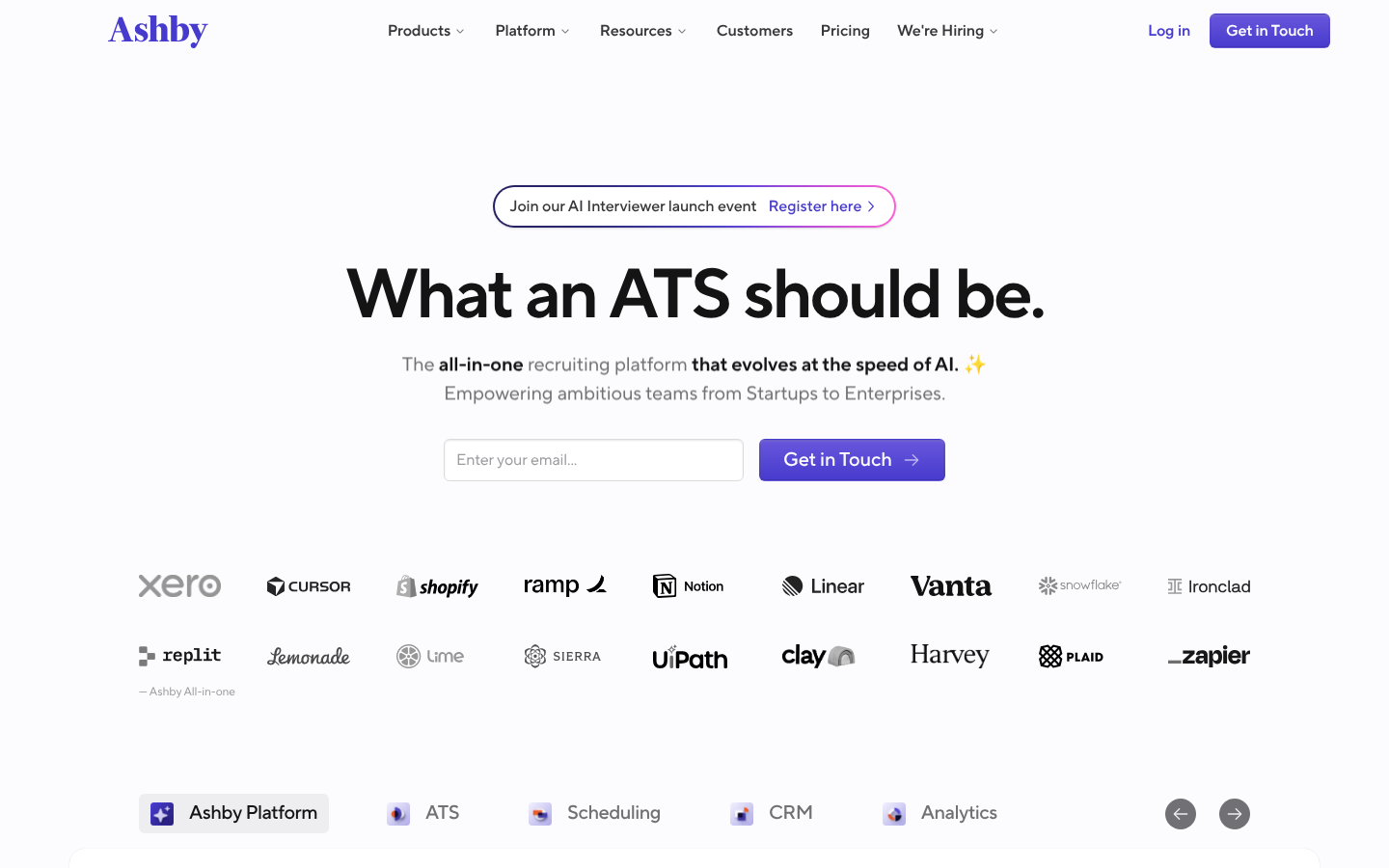 Ashby homepage, November 2026
Best for: Automated scheduling and recruiting analytics.
Key strength: Ashby brings ATS, CRM, sourcing, scheduling and analytics into one platform. Candidates book their own interviews through direct booking links, and Advanced Auto-scheduling, a paid add-on, builds complex panels and multi-day loops across time zones. AI-Assisted Application Review screens applicants, and Ashby Assistant and custom agents act on the tasks you set.
What to check for APAC: Whether candidates can be reached on WhatsApp, which local job boards it posts to, and whether data can be hosted in the region.
Data compliance and AI governance: Ashby says it does not train AI models on customer data, a person must always be involved in decisions, and candidates can opt out of AI. It holds SOC 2 Type 2. Hosting region: not stated publicly.
Pricing model: The entry Foundations plan is published; Plus and Enterprise are quote-based. AI features run on credits.
Greenhouse
Website: greenhouse.com
Best for: Structured, rules-based hiring workflows.
Key strength: Every plan includes scheduling automation rules and candidate self-scheduling. Automated scheduling books panel interviews over one day or several, using Google Calendar or Outlook 365. Structured stages keep every office on the same hiring process.
What to check for APAC: Apply with SEEK lets candidates prefill applications from their SEEK profile. Ask how jobs reach JobStreet and JobsDB, and whether WhatsApp and Lark connect natively or through partners.
Data compliance and AI governance: Greenhouse says the decision is always yours, it does not train AI on personal data, AI features can be switched off for the whole organisation, and Warden AI runs monthly bias audits. It is certified for ISO 27001, ISO 27701 and ISO 42001. Hosting region: not stated publicly.
Pricing model: Quote-based, with Core, Plus and Pro plans.
Lever
Website: lever.co
Best for: Combining ATS pipelines with candidate nurture.
Key strength: LeverTRM puts the ATS and a built-in CRM together, so nurture campaigns reach candidates before they apply. Lever automates interview scheduling and follow-ups, offers candidate self-scheduling, moves candidates forward with smart workflows and posts jobs to 200+ boards in one click.
What to check for APAC: Which local job boards are among the 200+, how chat channels such as WhatsApp connect, and whether US or EU hosting meets the data rules in your markets.
Data compliance and AI governance: No public information on AI governance; ask for documentation. Lever holds SOC 2 Type 2 and ISO 27001 and hosts data on AWS in US West and EU Central regions.
Pricing model: Quote-based, scaled to team size and hiring needs. Some AI features are add-ons.
Manatal
Website: manatal.com
Best for: AI candidate matching from your talent pool.
Key strength: One posting reaches more than 2,500 channels, including SEEK, JobStreet and JobsDB, and candidate profiles are enriched automatically as they are created. AI recommendations surface matches from your talent pool. On Enterprise plans, triggers send emails when candidates apply, change stage or drop out.
What to check for APAC: Permissions and workflow depth for teams hiring in several countries, and whether US data storage fits the markets you hire in.
Data compliance and AI governance: No public information on AI governance; ask for documentation. Manatal holds SOC 2 Type II and states that all customer data is stored in the US on AWS.
Pricing model: Published per-user plans; AI Interviewer is an add-on.
Moka AI
Website: mokahr.io
Best for: End-to-end automation for APAC hiring.
Key strength: Moka AI is built around the tools and hiring ecosystems used across APAC, connecting with local job boards and everyday work platforms such as Lark and WhatsApp. Its AI-powered, user-friendly approach helps teams adapt workflows to changing recruitment needs across different roles and markets.
Moka AI supports cross-border hiring with tools to help organizations manage local requirements, and its capabilities are backed by measurable methods and customer results.
What to check for APAC: Connections to the HRIS or eHR you use in each country, and how approvals and data access are set up for each market.
Data compliance and AI governance: Moka AI provides recommendations, and all AI evaluations are recorded, traceable and auditable. All final hiring decisions remain in human hands. The platform holds SOC 2, ISO/IEC 27001 and ISO/IEC 27701, and data is hosted in Singapore with access scoped by region and role.
Pricing model: Quote-based. Request a demo for pricing in your markets.
SmartRecruiters
Website: smartrecruiters.com
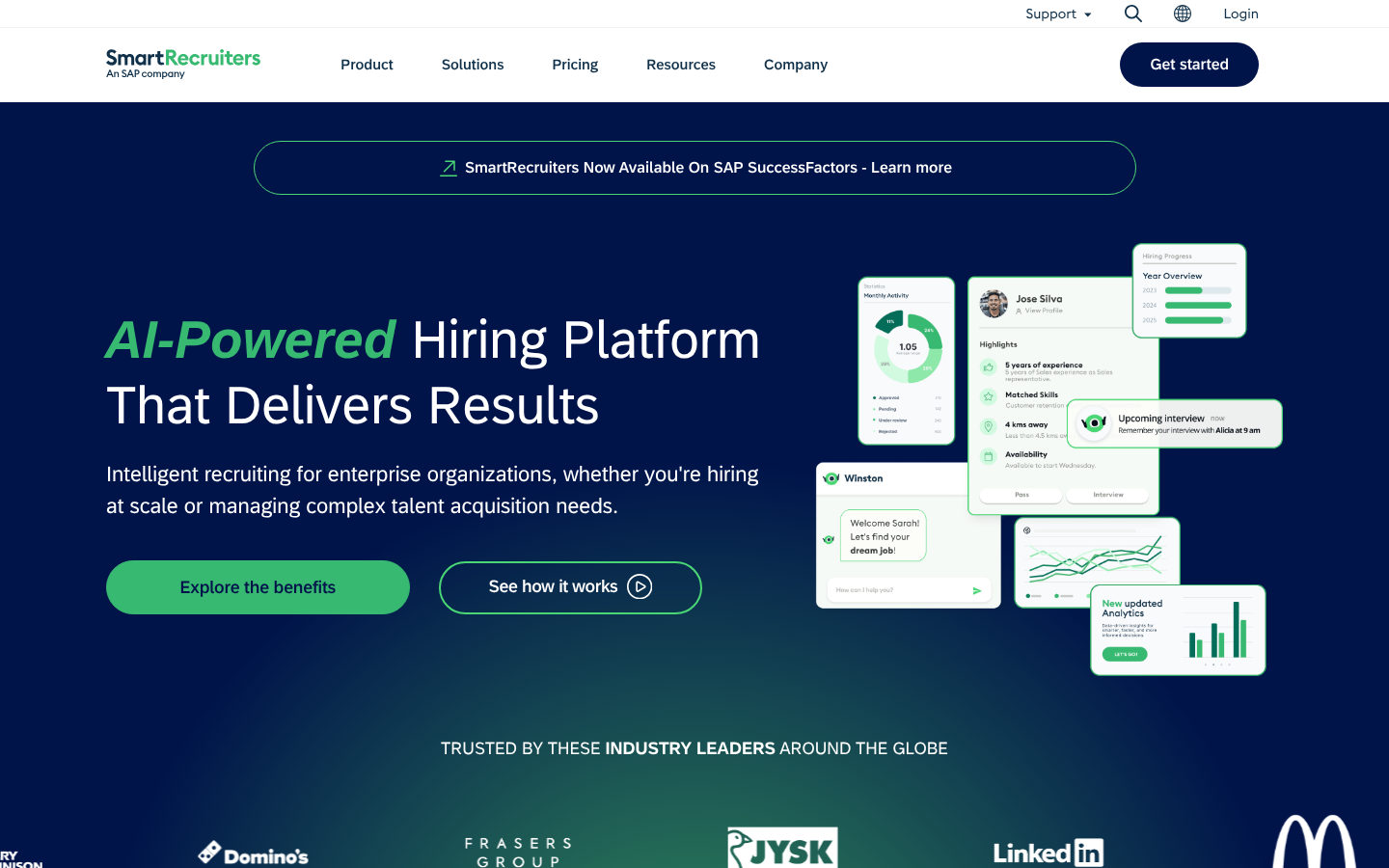
Best for: High-volume enterprise hiring workflows.
Key strength: Winston, its AI layer, automates high-volume steps. Winston Match finds the strongest candidates for each role and Winston Screen builds shortlists. Winston Chat guides candidates through applying and books interviews with reminders over SMS, WhatsApp or web chat, in 37 candidate-facing languages.
What to check for APAC: Which Southeast Asian languages are among the 37 candidate-facing languages, how jobs reach JobStreet and JobsDB, and whether its Australia data center meets the data rules in your other markets.
Data compliance and AI governance: No public information on AI governance; ask for documentation. SmartRecruiters holds SOC 2 Type 2 and ISO 27001 and offers an Australia data center.
Pricing model: Quote-based. Winston Chat is an add-on.
Workable
Website: workable.com
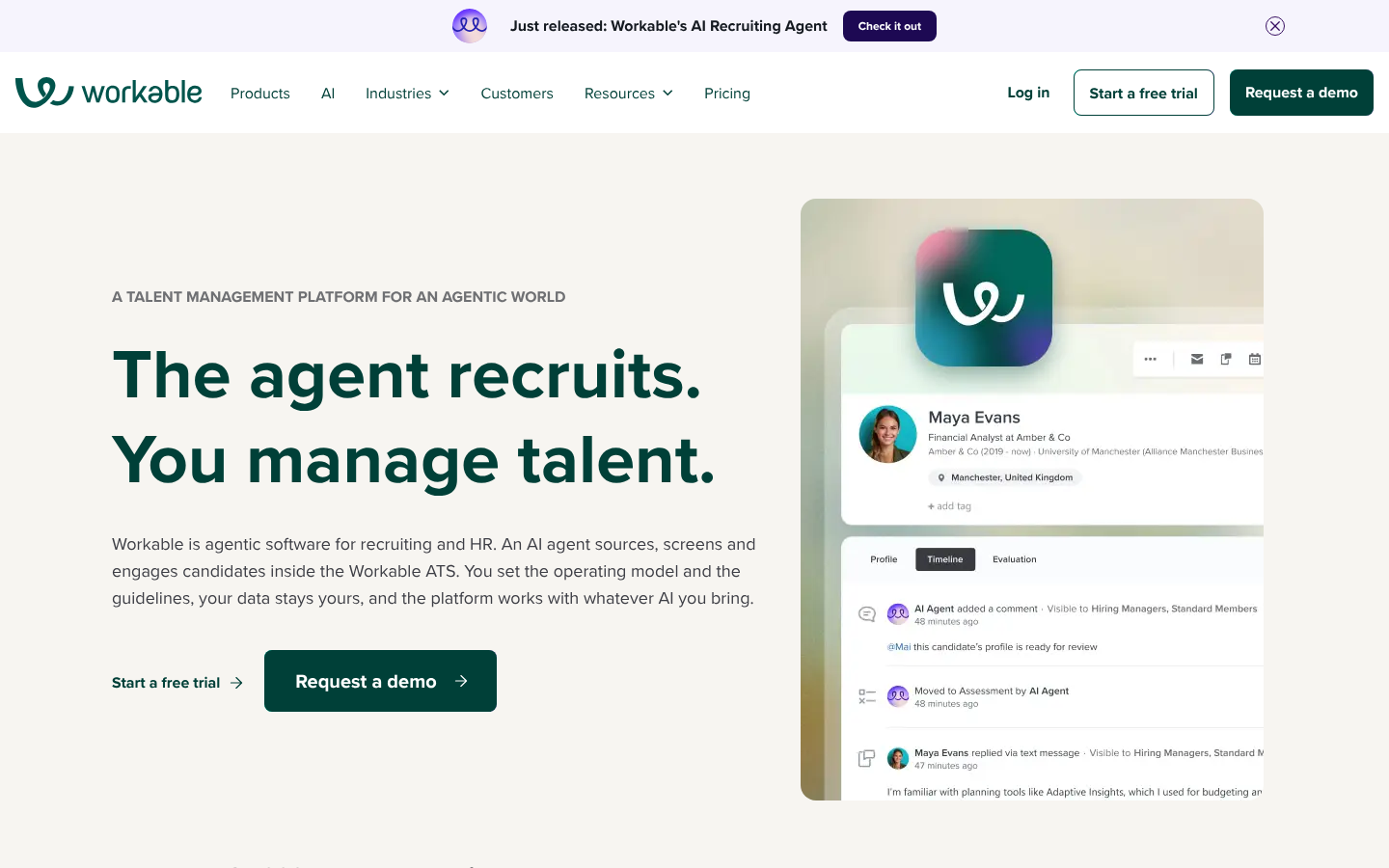
Best for: Automated job posting and AI screening.
Key strength: The Workable agent searches more than 400 million profiles, screens applicants against up to 14 job criteria and engages candidates inside the ATS. Jobs post to 200+ boards, including JobStreet, JobsDB and SEEK, and automated actions send messages and self-scheduling links as candidates change stage.
What to check for APAC: Whether candidates can be reached on WhatsApp, how far workflows can differ by country, and whether data can be hosted in the region.
Data compliance and AI governance: Workable says recruiters keep the final call, and that it uses customer data to improve its in-house AI. It holds ISO 27001, ISO 27017 and SOC 2 Type II. Hosting region: not stated publicly.
Pricing model: Published plans; the sourcing, screening and engagement agents are add-ons paid with AI credits.
Sourcing automation
Sourcing automation software finds and contacts candidates before they apply. Check that every contact and reply writes back to your ATS.
Gem
Website: gem.com
Best for: Sourcing sequences and talent rediscovery.
Key strength: Sequences automate multi-step outreach: email follow-ups send automatically, while InMail steps stay manual. The AI Sourcing Agent searches more than 800 million profiles, and a recruiter approves outreach before it goes out. The AI Rediscovery Agent resurfaces past candidates, and automated booking ends scheduling back-and-forth.
What to check for APAC: How well its profiles cover Southeast Asia and Hong Kong, and how candidates and activity sync with your ATS.
Data compliance and AI governance: Gem says its AI does not make hiring decisions, recruiters do, and that its AI is audited for bias each year. Certifications: not listed on its security page; ask for documentation. Hosting region: not stated publicly.
Pricing model: Custom, based on your company's headcount. AI agents need an AI-Powered seat.
hireEZ
Website: hireez.com
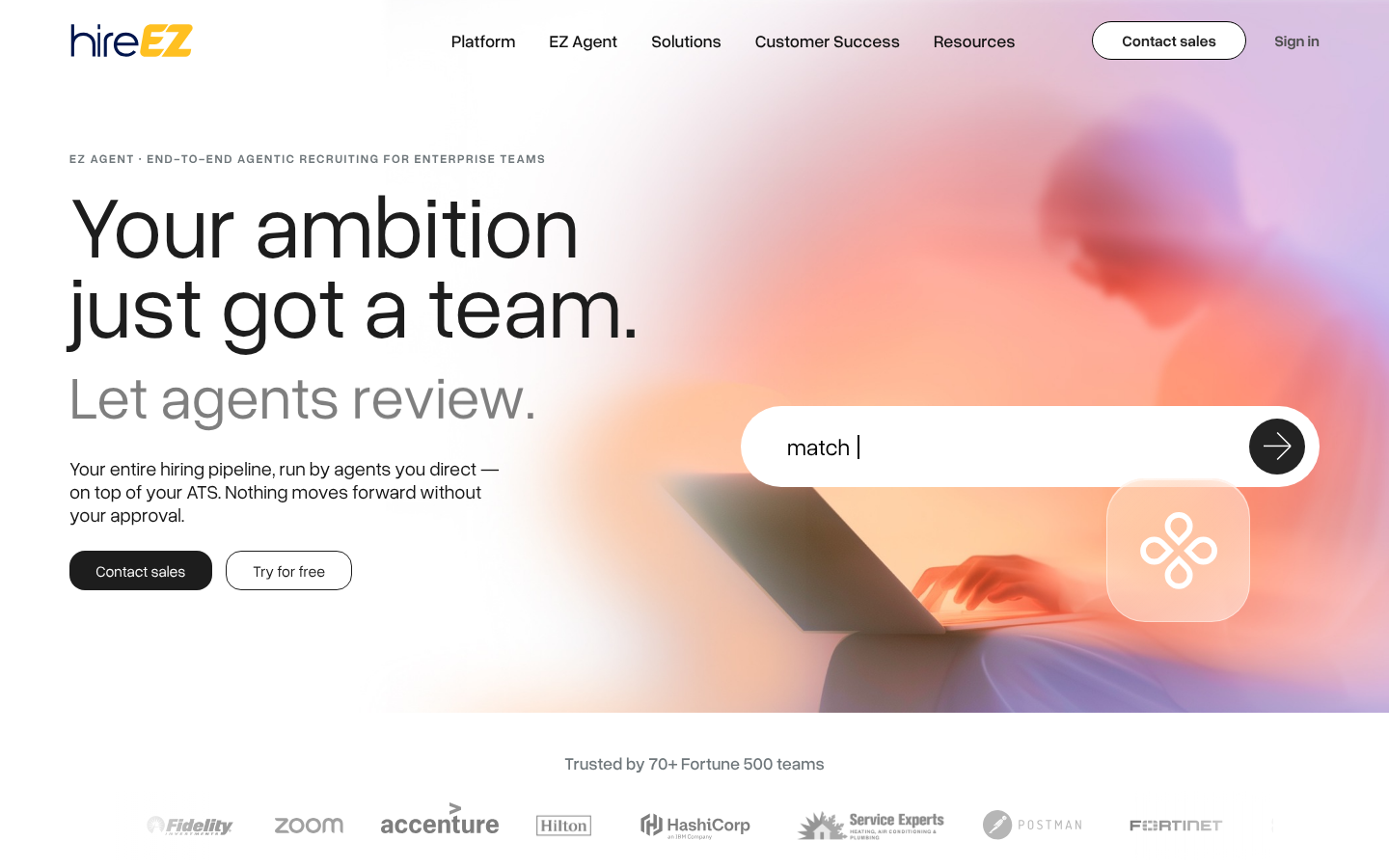
Best for: Open-web sourcing and outreach.
Key strength: EZ Agent runs on top of ATSs such as Workday, SAP SuccessFactors, iCIMS and Greenhouse. It sources across more than 1 billion profiles on 45+ platforms, rediscovers candidates you already hold, ranks applicants, screens by voice and chat, schedules around calendars and panels, and runs email campaigns.
What to check for APAC: Profile coverage for Southeast Asia and Hong Kong, outreach channels beyond email, and whether US hosting fits your markets.
Data compliance and AI governance: hireEZ says no candidate moves forward or is rejected without your approval. It holds SOC 2 Type 2, ISO 27001 and ISO 27701, and hosts data in AWS US regions.
Pricing model: A solo recruiter plan is published; enterprise pricing is quote-based.
Lexiom
Website: lexiom.ai
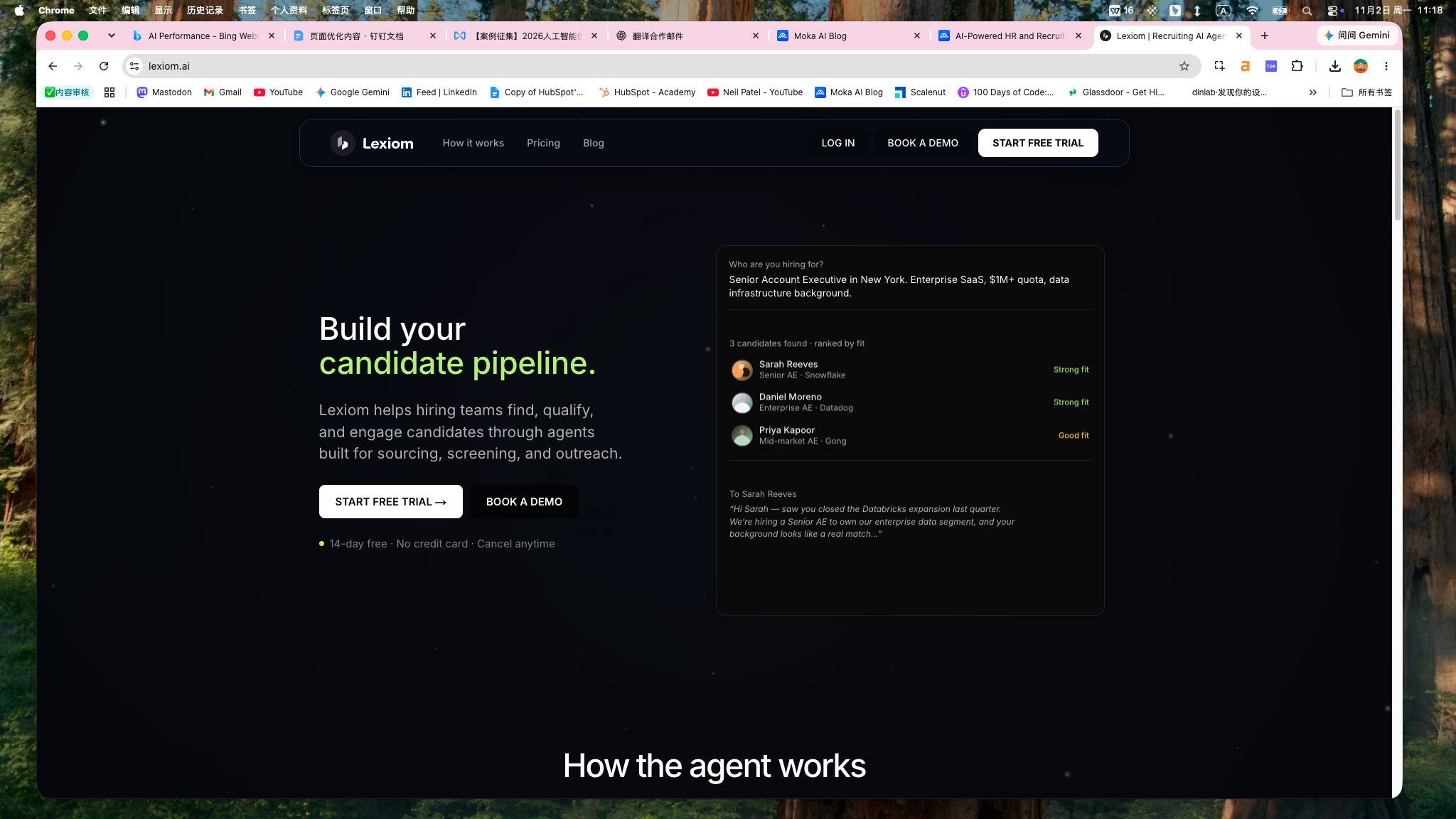
Best for: Always-on AI sourcing per open role.
Key strength: Describe a role in plain language, and the agent searches LinkedIn, GitHub, public resumes and professional communities (800M+ profiles). It scores candidates against your must-haves and nice-to-haves, sends personalized outreach, routes replies to your inbox and runs until the role is filled.
What to check for APAC: Which countries and languages its candidate data covers, which ATSs it syncs with, and which outreach channels it supports in your markets. The 14-day trial is a chance to test coverage for your roles.
Data compliance and AI governance: No public information on AI governance or certifications; ask for documentation. The privacy policy lists Singapore PDPA rights and encryption in transit and at rest.
Pricing model: $149 per agent per month, where one agent covers one open role, with a 14-day free trial.
Scheduling and conversational automation
These tools book interviews and answer candidate questions. They save the most time in teams that hire at volume or run many panel interviews.
GoodTime
Website: goodtime.io
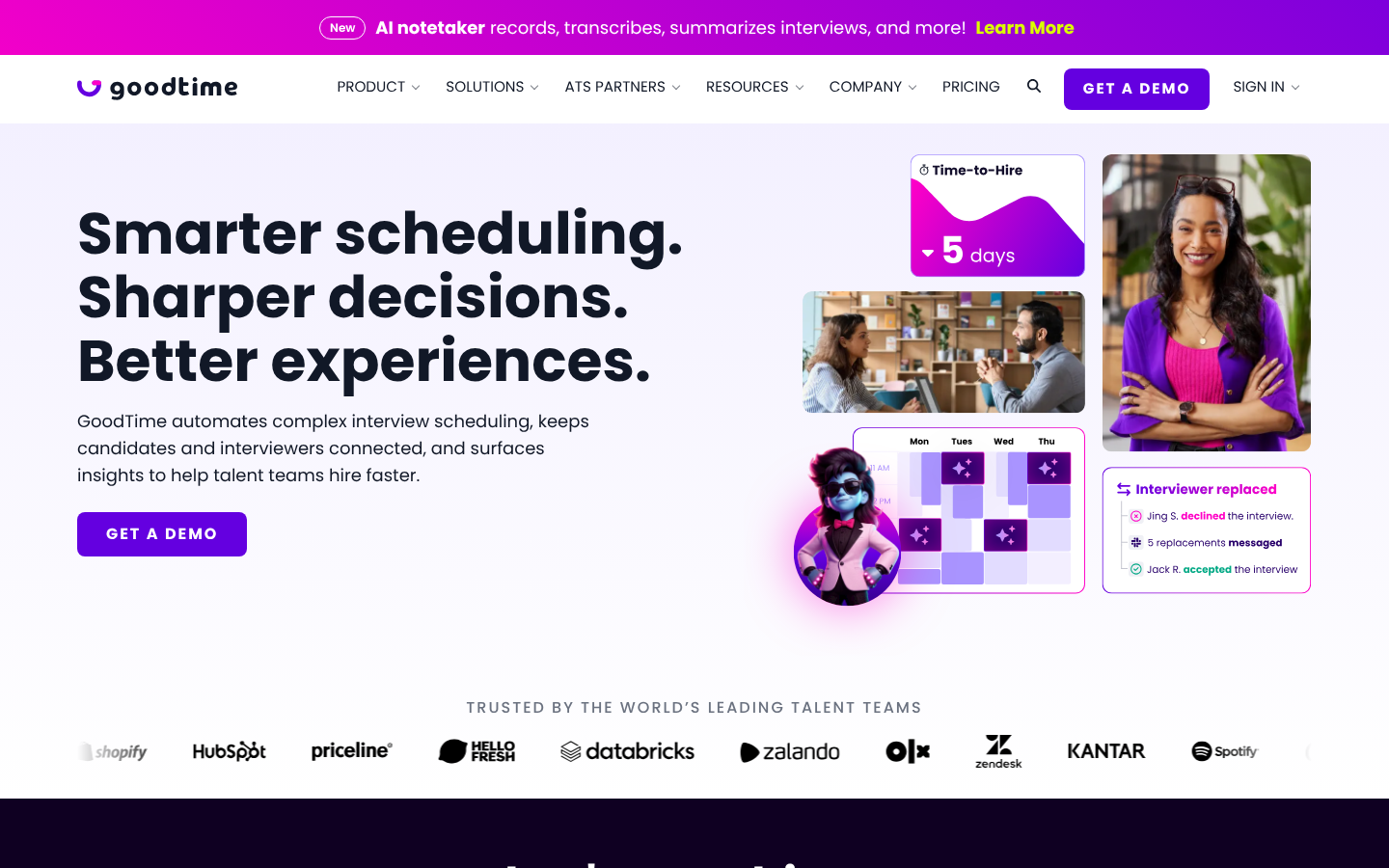
Best for: Multi-panel interview scheduling.
Key strength: GoodTime automates single-day, multi-day and panel interviews, balances load across interviewers and gives candidates a branded self-scheduling portal. Its AI agent, Cori, schedules across global time zones. It connects to Google Calendar, Office 365 and Outlook, and to Zoom, Google Meet, Teams and Webex.
What to check for APAC: Whether it can connect to Lark calendars, and how invitations reach candidates who rarely read email.
Data compliance and AI governance: GoodTime describes its AI as bias-audited. It holds SOC 2 Type II and ISO 42001 and offers EU hosting.
Pricing model: Quote-based, priced by the number of candidates a year rather than by user.
Paradox
Website: paradox.ai
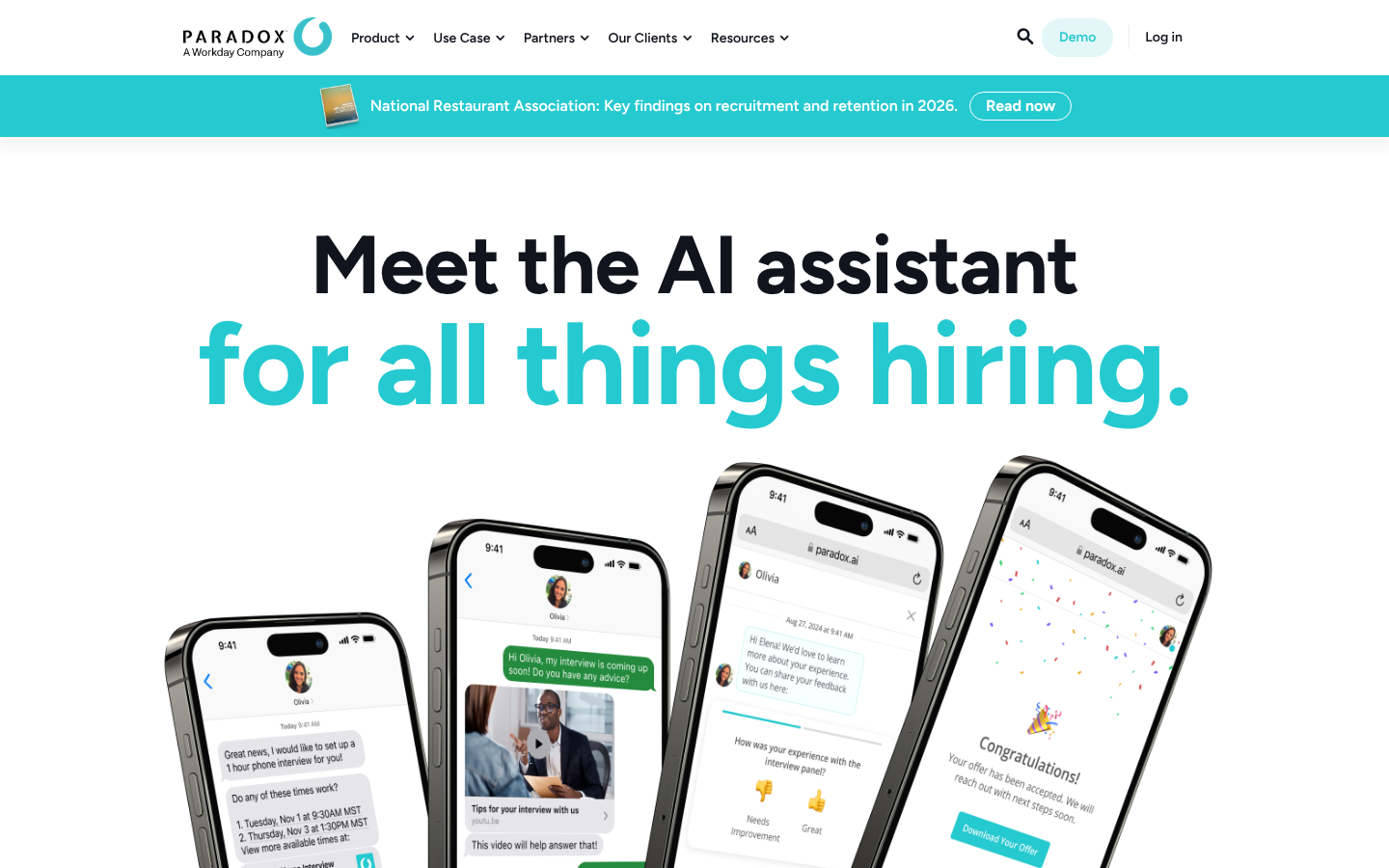
Best for: Conversational screening in frontline hiring.
Key strength: Its AI assistant lets applicants start applying and screening over SMS, WhatsApp or Facebook Messenger. It then books multi-person, multi-room and multi-location interviews, detecting time zones and translating into more than 30 languages.
What to check for APAC: Which Southeast Asian languages work well in practice, whether WhatsApp screening runs on local numbers in each market, and where candidate data is hosted.
Data compliance and AI governance: Paradox says its AI supports human decision-making and runs regular bias evaluations. It holds ISO 27001 and SOC 2 Type II. Hosting region: not stated publicly.
Pricing model: Quote-based.
Talent intelligence
Talent intelligence platforms automate matching and recommendations across a company's talent data, from new applicants to current employees.
Eightfold AI
Website: eightfold.ai
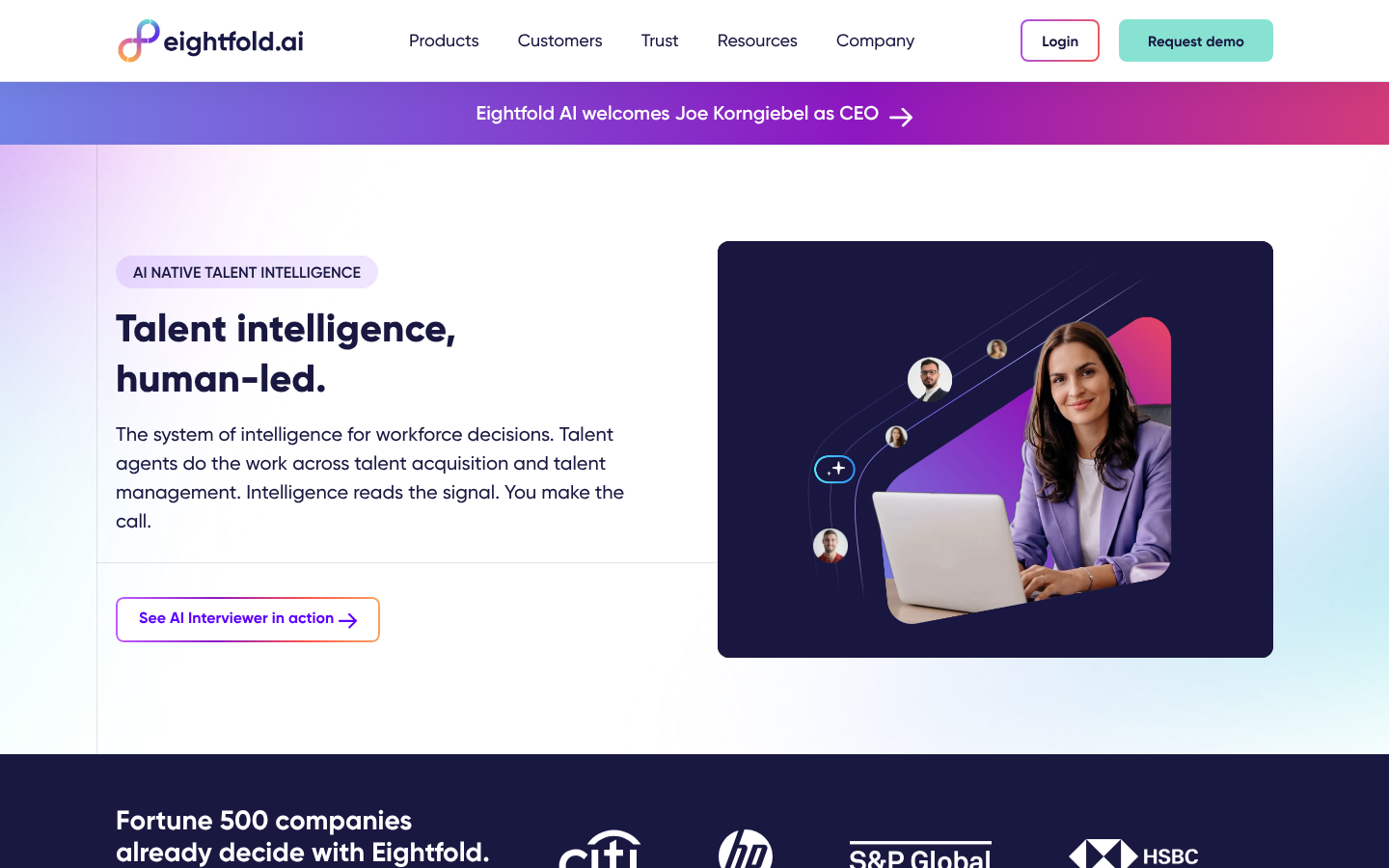
Best for: Skills-based matching at enterprise scale.
Key strength: Talent agents automate hiring work on top of a skills-based view of each candidate. AI Interviewer and AI Interview Companion support first-round and live interviews, and AI Candidate Concierge answers candidates over SMS, WhatsApp, web and voice in 24+ languages.
What to check for APAC: Which Asia data storage regions are available, and how well its skills matching covers your local job titles and languages.
Data compliance and AI governance: Eightfold says humans make the decisions and that third parties audit its AI for bias. It holds ISO 42001, ISO 27001, ISO 27017, ISO 27701 and SOC 2 Type II, and stores data in the region you choose.
Pricing model: Quote-based.
6. FAQs
What's the difference between an ATS and recruitment automation software?
An ATS tracks jobs and applicants from application to offer, and most now automate parts of that work. Recruitment automation software is the wider category: it includes ATSs with built-in automation and point tools that automate a single step, such as sourcing or scheduling. See all-in-one platform or point tools for when to use each.
What is sourcing automation software?
Sourcing automation software finds candidates before they apply and contacts them for you, through search, scoring, outreach sequences and follow-ups. Gem, hireEZ and Lexiom are examples (reviewed here). Whichever you choose, every contact and reply should write back to your ATS.
Will recruitment automation replace recruiters?
No. Automation takes over scheduling, follow-ups and data entry, and AI can rank candidates and explain its reasoning. Decisions to reject or hire should stay with people, as covered in where automation should stop.
Next step: run one real role end to end
Start by finding where your recruiters' hours go.
Match that to one of the four situations in section 4, then score three tools from your shortlist on the five factors in section 3. Before you sign, run one real role through each tool, from application to booked interview, on the channels your candidates use.
If your candidates reply on WhatsApp and your managers work in Lark, request a Moka AI demo and see how the WhatsApp Agent and automated scheduling handle one of your own roles. For examples, read how Traveloka and Decathlon automated hiring.

Author
Damon Liu
Marketing Manager
Hello everyone! I'm part of the Editorial Team at Moka AI, where I focus on global content, including writing and editing in-depth insight articles. I love exploring new ideas, discovering new tools, and finding fresh perspectives. My goal is to create content that’s genuinely valuable and helpful for HR professionals, while keeping it engaging, relatable, and fun to read!